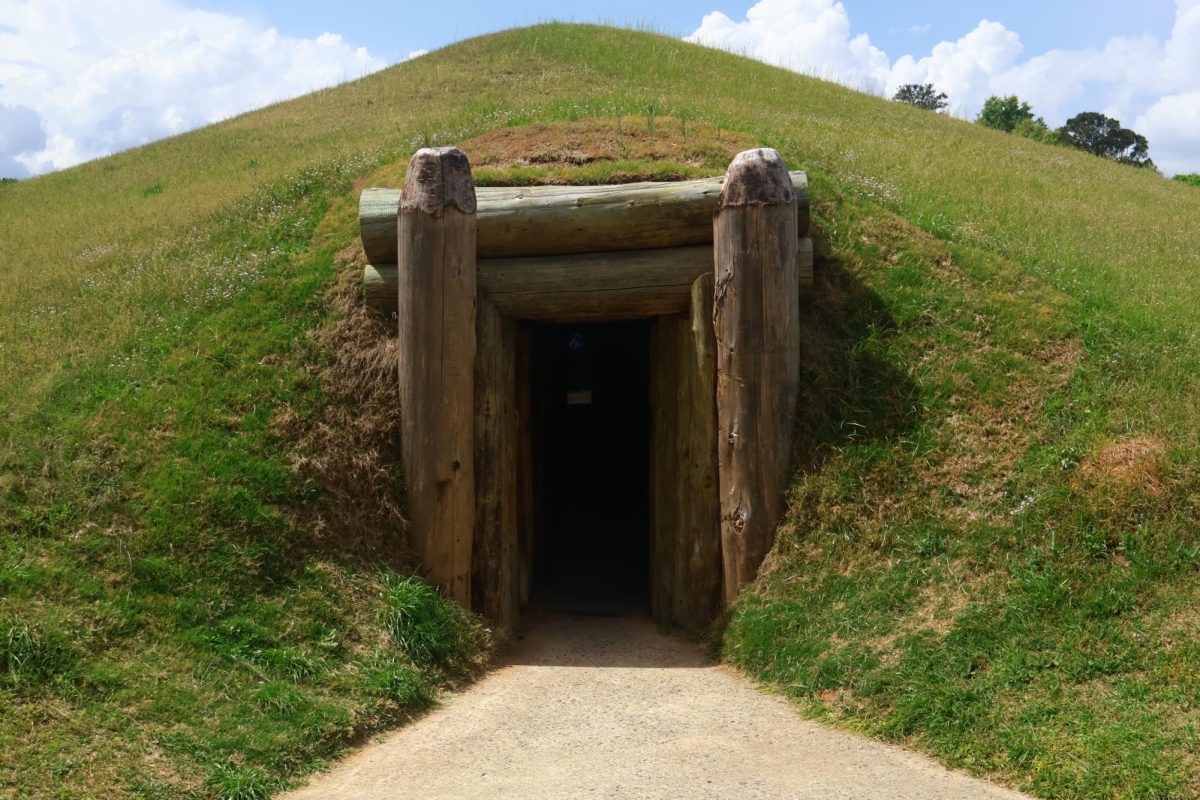
The vast historical and culturally rich lands of the Ocmulgee Mounds National Historical Park are situated in Middle Georgia. The park is home to the largest archeological dig in American History which took place in the 1930s. The Ocmulgee Mounds are a local example of sites in which archeologists and Native Americans must discuss the benefits of studying historical artifacts while also preserving sacred grounds.
“They’re not always in agreement right now,” Tracie Revis, CEO and Director of Advocacy for Ocmulgee National Park and Preserve Initiative, said about members of the Southeastern Archeological Society.
A lot of archaeologists and academics “want to keep photos of burials and remains and funerary objects, and then cultural people are saying, ‘No, that those don’t need to be seen,” Revis explains. While it makes sense from a scientific standpoint to dig up a body and learn more about previous histories, the remains are someone’s ancestor and are connected to people still alive today, Revis said.
“All these museums that have our people, those all need to go back to the ground, and they need to go back to the family so that they can be restored,” Revis, who is a citizen of the Yuchi and Muscogee tribes, said. “We are still connected to those people who are buried here in these sites.”
Revis explains that for many the heart of the dispute is whether an artifact has cultural or scientific research value.
In terms of arrowheads, “the law is if it’s found above ground, meaning it got washed up or something, you are legally allowed to take it. Does that mean you should ethically? You know, that’s a personal decision,” Revis said.
When it comes to pottery shards, Revis said it surprises most people when they are told that Natives do not want them back. “They don’t know where they came from, and they don’t know what they are a part of,” she said. “They could have been buried with a body.” Because the shards should not have come up in the first place, Revis said if they return them, they are returned to the soil or water where they came from.
On the archeological side, there is no way to return artifacts to where they were before excavation. So by putting artifacts back, a false narrative can be spun, professional archeologist and adjunct professor of anthropology at Mercer University Quinn Connally said.
If someone does not have a record of an excavation and reburying, and they come across the artifacts in the future, “they’re going to have some bogus, inaccurate archaeological report, because you’ve taken everything out of context.”
Due to continuing technological advancements, archaeologists are deliberately leaving artifacts buried in hopes that as time progresses, more information can be gathered than it could now, Connally said.
If someone excavates now, “you better have a lot of good records,” Connally said. “When you excavate, it’s done. You can only do it once.”