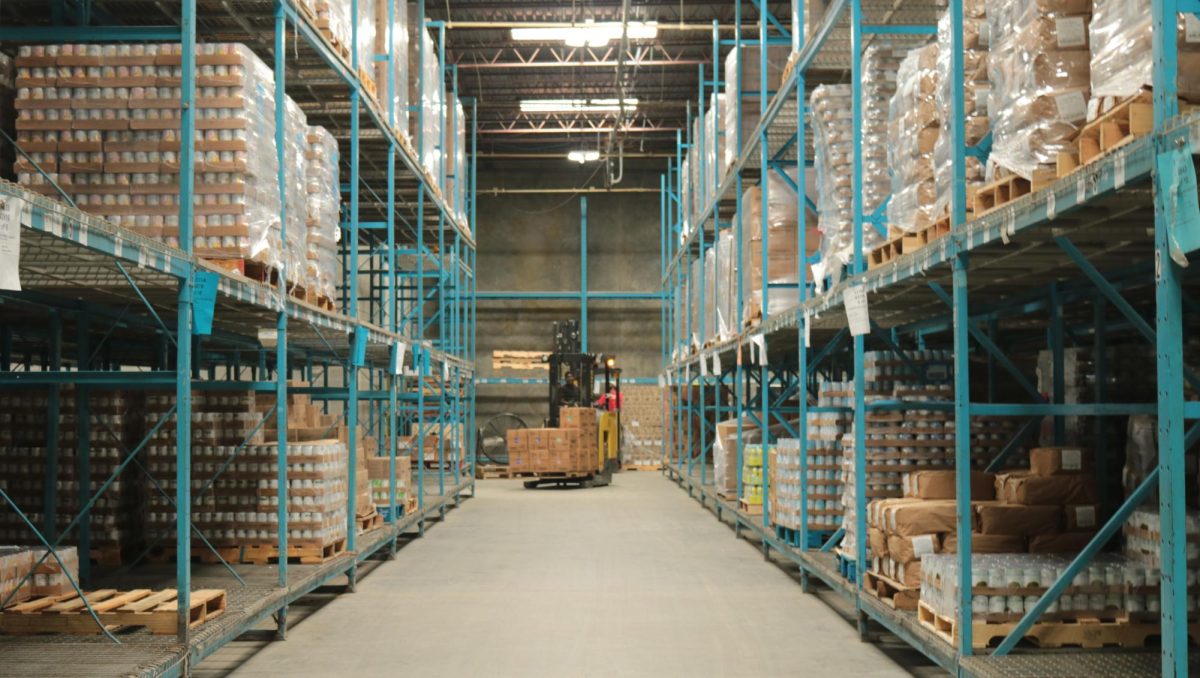
On an average day at the Middle Georgia Community Food Bank warehouse, forklifts whirr past large pallets of peanut butter, bread and canned goods. A refrigerated section holds produce, mostly lettuce donated from the nearby Bright Farms along with fruits and milk, as large trucks prepare to deliver hundreds of pounds of food to families throughout Central Georgia.
“I think a lot of people come here thinking that they’re going to go to the back room of the church where we can hand out a bunch of groceries, and that’s not what we are,” said Kathy McCollum, president and CEO of Middle Georgia Community Food Bank.
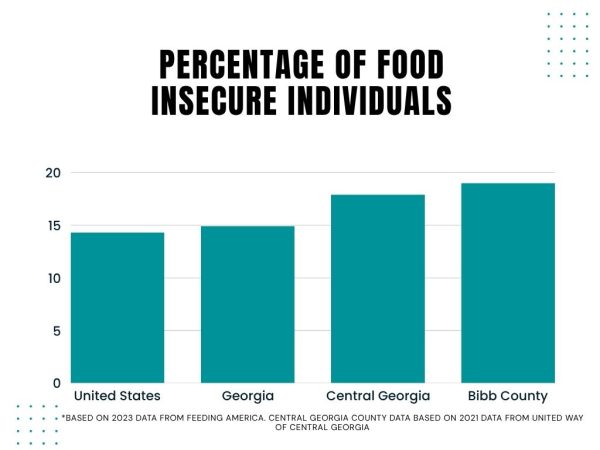
MGCFB sells and distributes food to partner food banks in their 24-county service area, who then distribute it independently to their local communities. Over 117,000 people in Central Georgia experience food insecurity, defined as inconsistent access to healthy, affordable food.
Across the nation, more individuals are finding it difficult to know where their next meal will come from. In the area MGCFB serves, the number of people in need of assistance with food rose 10% from last year, a number likely to go up with cuts to federal food assistance programs like the Supplemental Nutrition Assistance Program (SNAP), which helps low income families afford monthly groceries.
In September, the federal government announced that the USDA would no longer administer its annual The Household Food Security Report, which provides critical data on access to nutritious foods for lower-income Americans. Then earlier this month, SNAP recipients lost benefits Nov. 1 as part of a federal shutdown. All benefits were expected to be paid after the government passed a budget to reopen on Nov. 12, but deeper food insecurity persists in Middle Georgia.
“It’s a gap where parents may be skipping a meal so their children can eat, or they’re filling up on food that’s not very nutritious, just because it’s filling and it will keep somebody’s stomach from growling as they’re trying to go to sleep at night,” McCollum said. “But it’s not really the good food that they need to be healthy tomorrow or to be able to go to school ready to learn or go to work ready to make a difference there.”
McCollum said that when she first joined the organization during the COVID pandemic, she knew that there were many people in the service industry who fell into food insecurity after losing work as businesses were closing. Five years later however, climbing grocery prices, limited transportation options in rural areas, and growing inflation have made it hard for many people to fully recover.
“There’s just so many demands on families’ income. Childcare is hard to find and expensive to pay for, if you can find it,” McCollum said. “So people are trying to figure out how to stretch the money they’re making to cover food, healthcare, a place to live, transportation, and it’s more than a lot of our neighbors can handle.”
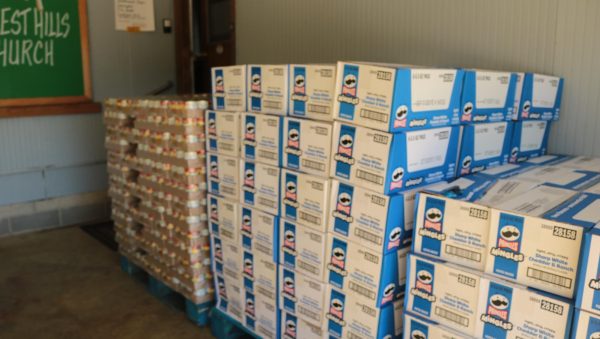
Middle Georgia Community Food Bank generally receives food from the USDA, who purchase wholesale from farmers and producers. Combined with donations from individuals, organizations, large companies like Frito-Lay, Purdue, and Tyson, and grocery stores like Walmart, Kroger, and Publix, the nonprofit is able to move food to over 200 partner agencies where those in need can receive food. Most of those agencies are emergency grocery pantries, but it also donates to backpack agencies that provide food for school children to eat at home, as well as a senior brown bag programs for older people without transportation
Backpack Buddies Ministries are one of the agencies that purchase food through MGCFB. Brenda Lambert, its coordinator, started the organization 14 years ago with other couples at her local church. Now, Backpack Buddies provides almost 1,700 pounds of food to students in 28 schools across Bibb, Monroe and Twiggs County every week. The children who qualify for the program have been identified by their school counselor as in need of food, Lambert said. Bibb County schools provide free breakfast and lunch, but oftentimes students may need food to hold them over after school and during the weekends.
“A lot of these children use this for an after school snack. When they get home, parents are working and they’re there by themselves, so they use it for after school,” Lambert said. You may have a middle class family that’s feeling the crunch of paying a bill, and this provides their kids with some good snacks they don’t have to buy at the grocery store.”
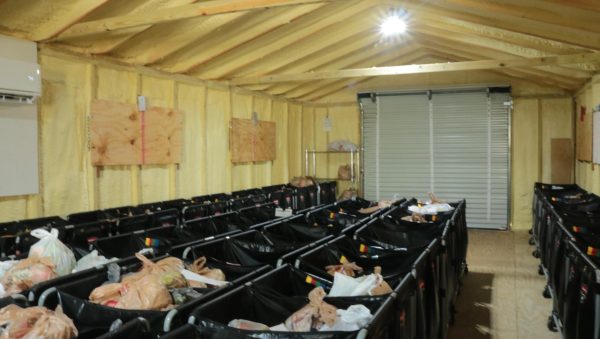
Backpack Buddies has over 350 volunteers that help distribute food, but occasionally the donations include personal hygiene items, uniforms, underwear, or jackets. Lambert says volunteers, especially those who have never experienced food insecurity, have an eye-opening experience when they visit the house where all of the bags are packaged.
“When somebody’s never been here and they walk in and they see all this food and they realize that every single bag represents a child that’s going to get food, it’s amazing,” she said.
While 1 in 6 adults in Middle Georgia experience food insecurity, 1 in 4 children are food insecure, according to McCollum. Lambert, who grew up in Macon, said circumstances have changed since she was younger: families are often stretched thin by a lot of hours at work and very little support.
“I went to school at one of the biggest schools we have in Macon, we serve about 250 of those children, and we’re sure it’s gonna go up to 300. They have about 370 kids, and we serve almost the entire school,” Lambert said. “Our parents stayed home, they cooked, and now you have working moms, you have single moms, and you have food that’s gone up [in price]. I think that has a lot to do with it.”
McCollum added that children’s family situations can make them more vulnerable to food insecurity.
“Adults face different types of challenges, but children don’t go out and earn money. They’re more vulnerable because there are things they can’t do, so they’re really sort of at the mercy of our society. A lot of what we hear about now are grandparents raising grandchildren because something happened to the parents,” she said. “You think about an older person on a limited income that didn’t necessarily plan to raise another generation of their family, and you’ve got growing children and mouths to feed, that can be really tough.”
Both McCollum and Lambert recalled school counselors saying that students with inconsistent access to food often become frustrated when they arrive late to school and cannot get breakfast. Many counselors keep breakfast bars or cereal in their office, but going without regular meals can make performing well at school difficult.
“If food’s not working in your life, then there are gonna be a lot of things that don’t work.” McCollum said. “It’s harder to concentrate, physical strength and ability and energy would be reduced if you’re not getting enough food or enough of the right kind of food over a long period.”
“If you’ve got a hungry tummy and it’s growling, you can’t concentrate on your work. Teachers tell us these children can’t study and they get sick easier,” Lambert said.
MGCFB has a SNAP outreach coordinator who helps people who qualify apply for benefits, which McCollum said is especially necessary for seniors who need help understanding the form or those experiencing homelessness and may not have access to the internet. With SNAP benefits, she added, individuals and families have more agency to buy the foods that work best for them.
“SNAP is the best method in our country that we have today for food assistance because the control is in the hands of people who need food. You may come to a food pantry and we have a whole lot of peanut butter, but maybe you have peanut butter at home and you really need chicken noodle soup. We can’t give you that, but with a SNAP EBT card, people can choose the food they need for their family,” she said. “It’s about that whole choice and having a wider variety of choices available to you at a grocery store than you will at a food pantry.”
You can donate or volunteer for Middle Georgia Community Food Bank and Backpack Buddies. For more information, visit mgcfb.org or https://foresthillsmacon.com/service/backpack-ministry