
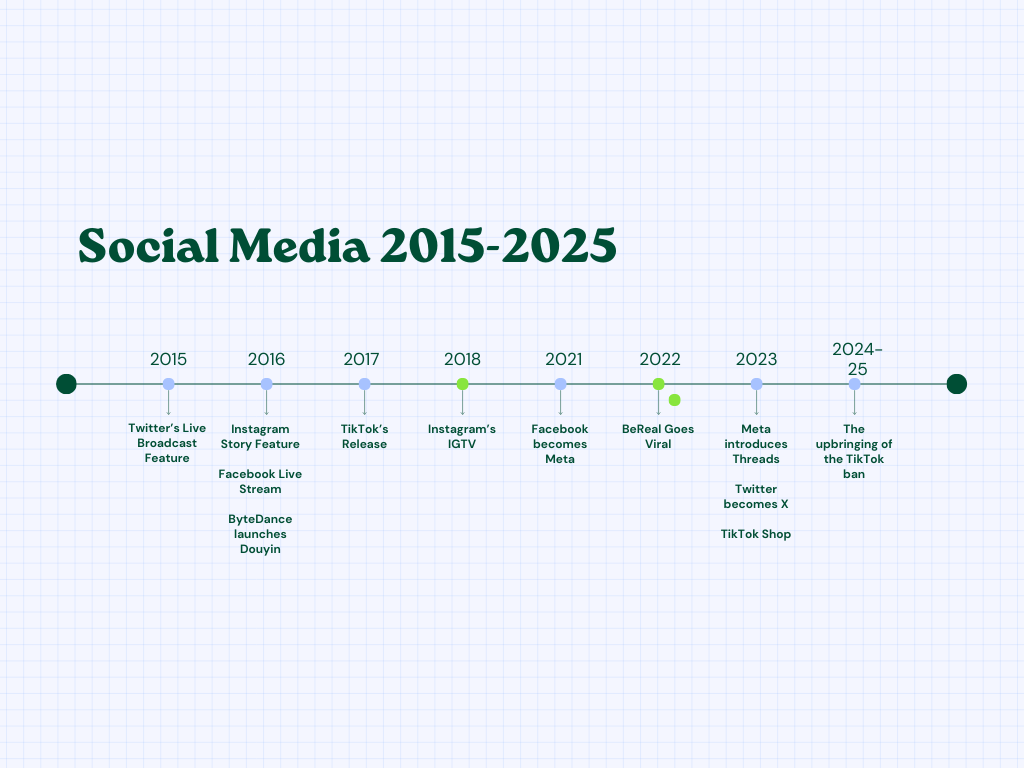
Out with the old and in with the new. The digital realm has seen some trendy platforms and original designs enter the internet with a bang but leave in a flash. In the past several years, these established social apps have adapted to be new and improved for the sake of audience attraction or to prevent discontinuation. Here’s a recap of notable shifts that has shaped these platforms to what they are today.
Year 2015:
Twitter (now X) introduced live broadcasts through an addition to its digital network called Periscope. In the first ten days, the app saw an engagement of one million users. The influx of engagement showed the interest of real time videos on a platform initially based on commentary posts.
Year 2016:
As a deviation to long-term profile posts, Instagram added a 24-hour story feature to boost members’ usage. The new post opportunity invited casual content with room to, “share as much as you want throughout the day.” The shift to a daily intended platform is similar to Snapchat’s feature of posts that disappear after 24-hours.
While Facebook had been active for over a decade, the platform permitted all users to live stream this year. With a simple click of an icon, users can broadcast their life for followers and active onlookers to interact with. The year embarked on a chain of real-time videos including entertaining streams and witness to violent events that gained viral traffic.
The company, ByteDance, launched an early model of TikTok known as Douyin in China. App users could create short-video clips through its creative tools and interact with users across the country. As of today, it remains the leading platform in China. The app has excelled in attraction from its 1-year existence of 100 million users to a current booming rate of over 3 billion downloads.
Year 2017:
TikTok, the app that is now the 5th most popular worldwide social media app, emerged through its integration with Musical.ly. ByteDance aimed to merge the audience from the app and its product, Douyin, to promote a global system of communication. The reported $1 billion investment expanded the content creation from Musical.ly’s lip sync focus to several various displays of creative works.
Year 2018:
To cater to the consumption of video content, Instagram widened its digital platform to include IGTV. The long-form vertical video option was extended to popular creators and brands to consider the revenue share opportunity. General users would also be permitted to share videos and create their own IGTV channel.
Year 2021:
Facebook rebrands to Meta, an initiative for all company’s apps and technologies to be listed under a broader label. The company aims to foster a horizon of media and communication services through its growing technology. Its mission was described to “help people connect, find communities, and grow businesses.”
Year 2022:
The French social app, BeReal, skyrocketed in download activity as it exceeded several popular platforms worldwide. The app’s attraction is rooted from its innovative approach of double camera postings for users to share their “real life.” The year was a prime period of activity, however the app later faced a drop in usage in 2024.
Year 2023:
An initiative by Meta related to text-based posts was released as Threads. The app would operate in partnership with the Instagram platform and will allow users to submit comments with the ability to attach photos or videos. The Thread app resembles the interactive network behind the formerly known Twitter app that became X this same year.
Elon Musk reinvented Twitter in 2023 after a battle for its acquisition. Under his administration he announced its new title as X, an app that aims to be a site for communication and marketplace. In the rebranded app, Musk commented X will, “add comprehensive communications and the ability to conduct your entire financial world.”
As an addition to the entertainment app, TikTok facilitated a shopping outlet for users to discover products through videos. The TikTok shop opened a channel for brands, influencers, and companies to gain mass attention to their products. Its visual and market experience led for the app to become the 4th most popular social commerce platform in the U.S.
Year 2024- 2025:
What would become a monumental point in global history would be the topic of the banning of TikTok within the U.S. The status of TikTok would be jeopardized by the federal concern for America’s cybersecurity given the owners of the app were a Chinese based company. The claims of the app’s corruption derived from breaches of private data and the potential harm to American users through a manipulated algorithm. The process in restricting the use of the app at the national level became official when the U.S. House Committee passed a unanimous security bill that included TikTok’s ban within the orders in 2024.
The ban’s enactment was set to land the day before Trump entered office on Jan 20, 2025 after an ongoing year of legal disputes between ByteDance and the federal government. The app went dark for 12 hours before it was restored through Trump’s signature of an executive order for TikTok to be co-owned by an American technology company, Oracle.