
In February, Coca-Cola re-released Diet Coke Cherry, a popular retro flavor first introduced in the United States in 1986. As part of the marketing initiative, Coca-Cola also launched a new flavor, Coca-Cola Cherry Float. According to Google Trends data, search interest in Coca-Cola in Georgia increased during the month of the flavors’ re-release, signaling renewed consumer attention tied to nostalgia-driven marketing.
While the launch may seem like a simple product revival, data show something larger: Coca-Cola continues to rely on nostalgia and strategic branding to drive measurable spikes in consumer interest—especially in Georgia, its home state, where the company’s influence remains deeply rooted.
Coca-Cola’s flavor portfolio has expanded since 1986, growing from six to more than 60 flavors. In 1986, Coca-Cola sold more products than Pepsi, its rival company, and generated $38 billion in revenue. By 2025, Coca-Cola reported $47 billion in revenue. The company’s marketing and brand image have long relied on nostalgia, contributing to its continued global success.
At a time when brands constantly reinvent themselves, Coca-Cola’s strategy shows the measurable value of consistency—using decades-old imagery and products to generate new engagement and revenue.
Coca-Cola was originally developed in Atlanta by pharmacist Dr. John Pemberton in 1886 and sold for five cents a glass. Before this, Coke was marketed for medical purposes. Frank M. Robinson suggested the name Coca-Cola, believing the two Cs would be visually appealing in advertising. The brand was trademarked on Jan. 31, 1893.
From its origin as a medicinal tonic to a global consumer product, Coca-Cola’s growth mirrors the rise of modern branding itself.
The original bottle, called the “Georgia Green” bottle, was manufactured in 1916 and became a central part of the brand’s iconography.
Stephanie Howard, a marketing lecturer at Mercer University, said Coca-Cola used this bottle shape intentionally in its branding. “In my opinion, they were the first to use that shape to the point where it’s called the Coke bottle shape,” Howard said. “If you do your branding right, people start calling that thing your name. And so they’ve done a really good job with that.”
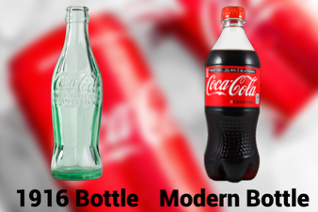
The bottle’s distinctive shape was influenced by a 1910s fashion trend known as the “hobbleskirt,” a style with a tapered appearance below the knees. This illustrates how fashion can influence industrial design and branding. The bottle was also nicknamed the “Mae West” bottle due to its resemblance to the actress’s figure, reflecting cultural beauty standards of the time. A French magazine described it as having a “contour” shape, designed to imitate the curves of a human body.
Because of this design, the bottle became extremely recognizable and helped distinguish Coca-Cola from competitors, contributing to its long-term dominance.
Coca-Cola’s branding is also closely tied to nostalgic iconography, including the modern image of Santa Claus. While the company did not invent the image, its advertising beginning in 1933 helped popularize the red-and-white version widely recognized today. Illustrated by Haddon Sundblom, this version of Santa became a recurring part of Coca-Cola’s holiday campaigns.
This linking of Santa to the brand has proven effective, allowing Coca-Cola to repeat holiday advertising annually and reinforce long-term customer loyalty. “And I don’t have the data, but I would assume when I look at their cash cow product lines, that these are customers who have been drinking that product their entire lives,” Howard said. “So some of the brand, like classic Coca-Cola, is very nostalgic.”
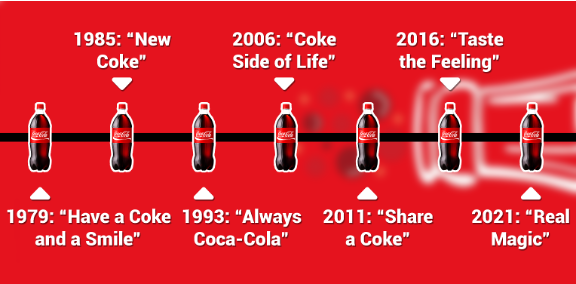
Coca-Cola’s marketing strategies continue to evolve while maintaining consistent messaging. Campaigns like “Have a Coke and a Smile,” introduced in 1979, positioned the drink as a moment of connection and joy during a time of social and economic uncertainty in the United States.
“And so with frequency in advertising, we just show the same image over and over and over again or the same message until it sticks in the minds of your consumers, and Coke is a masterclass in how to do that,” Howard said.
This strategy continues with the “Share a Coke” campaign, first launched in 2011 and relaunched in 2025. The campaign redesigned bottles with names and now includes QR codes that allow customers to create personalized videos through the “Memory Maker” experience, demonstrating a shift toward measurable digital engagement.
Coca-Cola’s influence is especially strong in Georgia. Search data shows increased interest in the state during major product launches, reinforcing the company’s local cultural and economic significance.
Customers can also explore the brand’s history at the World of Coca-Cola in Atlanta. The museum, ranked among the top pop culture museums in the United States, features exhibits like “Taste It!” which allows visitors to sample beverages from around the world, highlighting Coca-Cola’s global reach.
Coca-Cola’s continued success is not accidental. It is driven by a combination of historical branding, product expansion, strategic advertising, and one of the largest distribution networks in the world.
“One thing Coke has done that others aspire to do is focus on distribution,” Howard said. “The real battle is, can I make sure my product is everywhere that a beverage is sold? And that’s what they focus on.”
As new campaigns revive old products and generate new consumer data, Coca-Cola’s strategy shows that in a rapidly changing market, long-term brand consistency—combined with adaptation—remains one of the most effective tools for sustained global dominance.