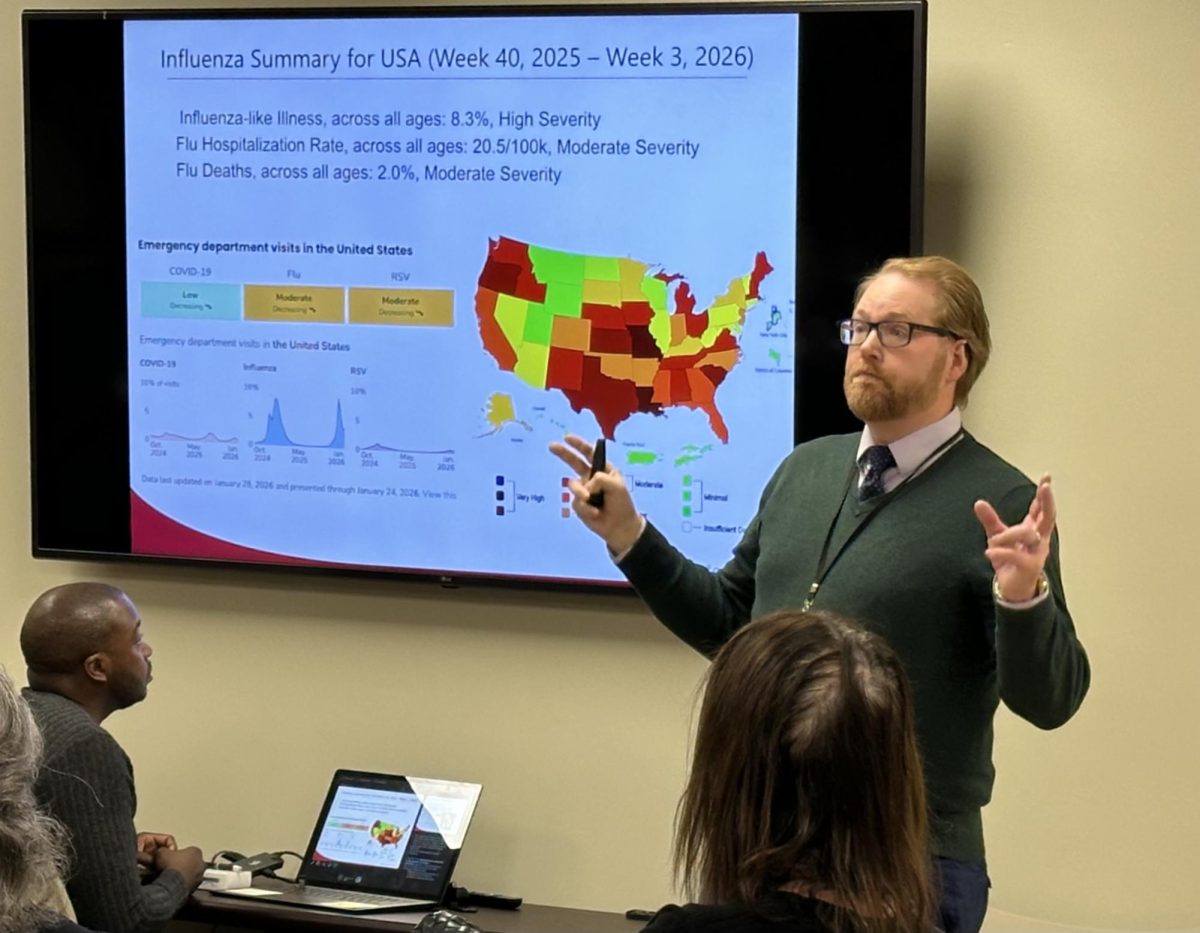
Medical professionals at the North Central Health District warn that Georgia is not immune from a measles outbreak like other states are seeing, and that’s not the only cause for concern.
More people may be dying in Macon-Bibb County than are being born, and the county consistently leads the region in identified cases of lead contamination and ranks No. 5 out of Georgia’s 159 counties for the number of children found to have lead in their system.
At February’s meeting of the Board of Health, North Central Health District’s new epidemiologist Ben O’Neal said although measles was technically eliminated by 2000 after a second vaccine dose became the standard recommendation, more than 900 cases have been reported in South Carolina since late 2025 in what is considered the worst measles outbreak in 35 years.
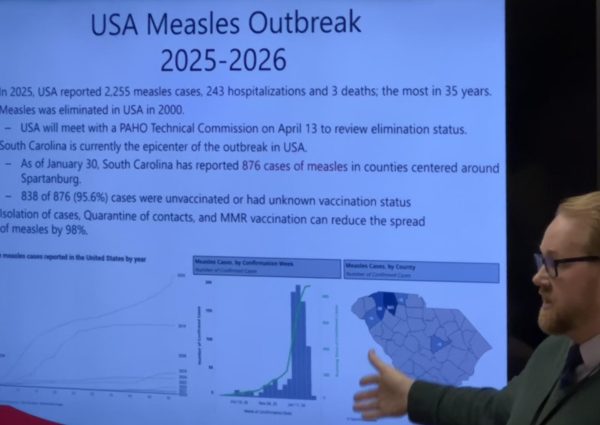
“Measles is so contagious it will find any pocket of people who are not vaccinated. We are very vulnerable here. We’ve got to make sure we are encouraging people to get vaccinated,” O’Neal told the board. “I don’t know about you, but I don’t think it’s going to stay in South Carolina.”
Last month, an infant too young to be vaccinated was diagnosed in coastal Georgia after the family had traveled internationally.
The CDC recommends vaccines for babies between 12 and 15 months, and a second dose when a child is 4 to 6 years old.
People born before 1957 are considered immune, and vaccinated adults born before 1989 also should be fine unless they have other risk factors.
Most of those who die after measles exposure succumb due to the disease’s effect on the immune system, O’Neal said.
“Measles creates immune amnesia,” O’Neal said. “It can kill 20 to 80% of all that immune capability, so essentially wipes out any disease (immunity) you’ve experienced. It’s not the cake walk we make it out to be.”
North Central Health District Administrator, Dr. Kim Cook, said people have been lulled into thinking measles is not a serious health threat.
“Kids die, kids are hospitalized,” Cook said. “It’s not a mild illness and we really do need to treat it like that.”
Vaccine hesitancy could play a role in this latest measles outbreak.
The total number of vaccines administered by the Macon-Bibb County Health Department has dramatically dropped, according to February’s report from Health Department Administrator Dr. Jimmie Smith.
From July to December in 2021, Macon-Bibb’s health staff administered 4,594 vaccines of all kinds, including those for COVID-19.
In the same period in 2025, the department reported 1,663 vaccines given, which was up from 1,041 the year before.
Smith also noted a troubling statistic, Bibb County currently issues more death certificates than birth certificates.
From July through January, the first seven months of the fiscal year, 7,963 birth certificates were issued compared to 5,924 birth certificates — a difference of 2,039.
In all of FY25, 14,049 death certificates outpaced the 11,311 birth certificates by 3,738.
“I don’t have a reason to give you for all of that, but that we have not seen in the last five years,” Smith said.
National death rates also have risen as baby boomers age into the higher-risk category of ages 65 and older.
Since the county can issue birth and death certificates for residents anywhere in Georgia, more research is needed to determine whether Bibb Countians’ death rate is outpacing births and if there are any other underlying factors, Smith said.
Battling infant and maternal mortality
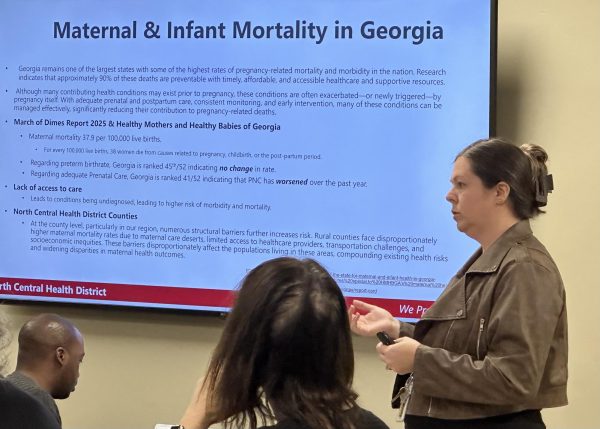
The North Central Health District is trying to increase the healthy birth rate and reduce maternal mortality numbers through its free Home Visiting Program for expectant mothers during pregnancy and the baby’s first year of life.
Nurses will visit high-risk mothers for wellness checks, better prepare them for birth and educate them about potential dangers.
“A lot of verbal and written education to these patients, warning signs, medication adherence, proper nutrition, and then the consistency of prenatal care and following it up at that six-week postpartum visit is key,” Ashley O’Neal, RN, told the board.
Although only seven of the district’s 13 counties are currently in the new program — Bibb, Jones, Baldwin, Peach, Wilkinson and Hancock — Dr. Cook expects the program funding to include Houston, Crawford, Jasper, Twiggs, Washington, Putnam and Monroe counties next year.
In the interim, they will accept patients from other counties if resources are available, Cook said.
High risk for lead poisoning
The North Central Health District also encourages parents to have their children under the age of 5 screened for lead contamination, which is prevalent in this area.
Since 2022 when Georgia strengthened testing standards and expanded its number of lead inspectors, Macon-Bibb County has consistently led the 13-county district in the number of screenings and confirmed cases, and ranks No. 5 of Georgia’s 159 counties for cases, said Caroline Obi, the district’s certified lead inspector.
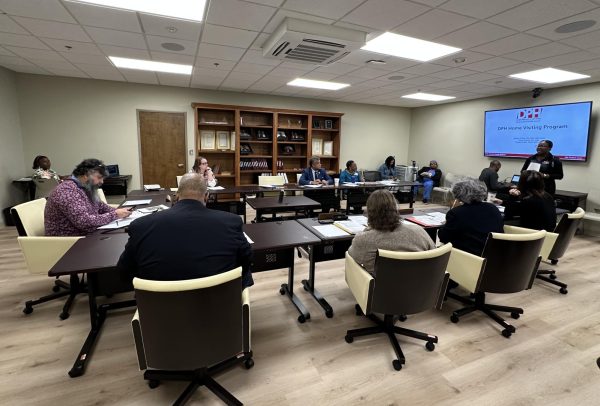
In Obi’s report to the board, she noted only 6,085 of the district’s estimated 32,000 children under the age of five were screened in 2024.
Even at very low levels, lead exposure harms brain development and affects behavior, learning and long-term health.
If a child has a lead level of 3.5 or higher, Obi visits the home to determine the source of the contamination.
The Centers for Medicare and Medicaid Services requires lead testing for Medicaid-enrolled children at ages 12 and 24 months as early detection is key, but many children are not being screened, according to a state report.
Obi stressed it’s crucial for all families to screen children as symptoms can go undetected until the damage is done.
Macon-Bibb County is particularly at risk due to the number of historic homes in the community.
“Lead poisoning does not discriminate by race or socioeconomic status,” Obi said. “They’re not even aware that their home could potentially be a risk for their child’s health long-term. And so what I’ve seen going into these homes is that these are kids that are not walking yet. They’re not talking yet. They’re already getting in line for a speech pathologist.”
Obi encouraged the board to promote public awareness efforts to maximize lead testing for the county’s children.
“It is in a way a silent killer because at really high levels it could be fatal,” Obi said. “But the good thing about lead is that it is 100% preventable, meaning you take the child out of the environment or you take the lead out of the environment.”
Unpaid food service fees
More than 225 food service facilities have a month to pay inspection fees and late fines or lose their permits as the board learned up to $65,000 remains outstanding after the Dec. 31 deadline.
Last summer, Macon-Bibb’s Board of Health enacted late fees for those who fail to pay on time.
Letters are going out warning those in arrears they could face a revocation of their permit if they don’t pay before a special called board meeting on March 9.
— Civic Journalism Senior Fellow Liz Fabian covers Macon-Bibb County government entities for The Macon Newsroom and can be reached at [email protected] or 478-301-2976.