
Almost daily, downtown business owner Kaitlynn Kressin hears about break-ins or people defecating in the alleys or sleeping in doorways.
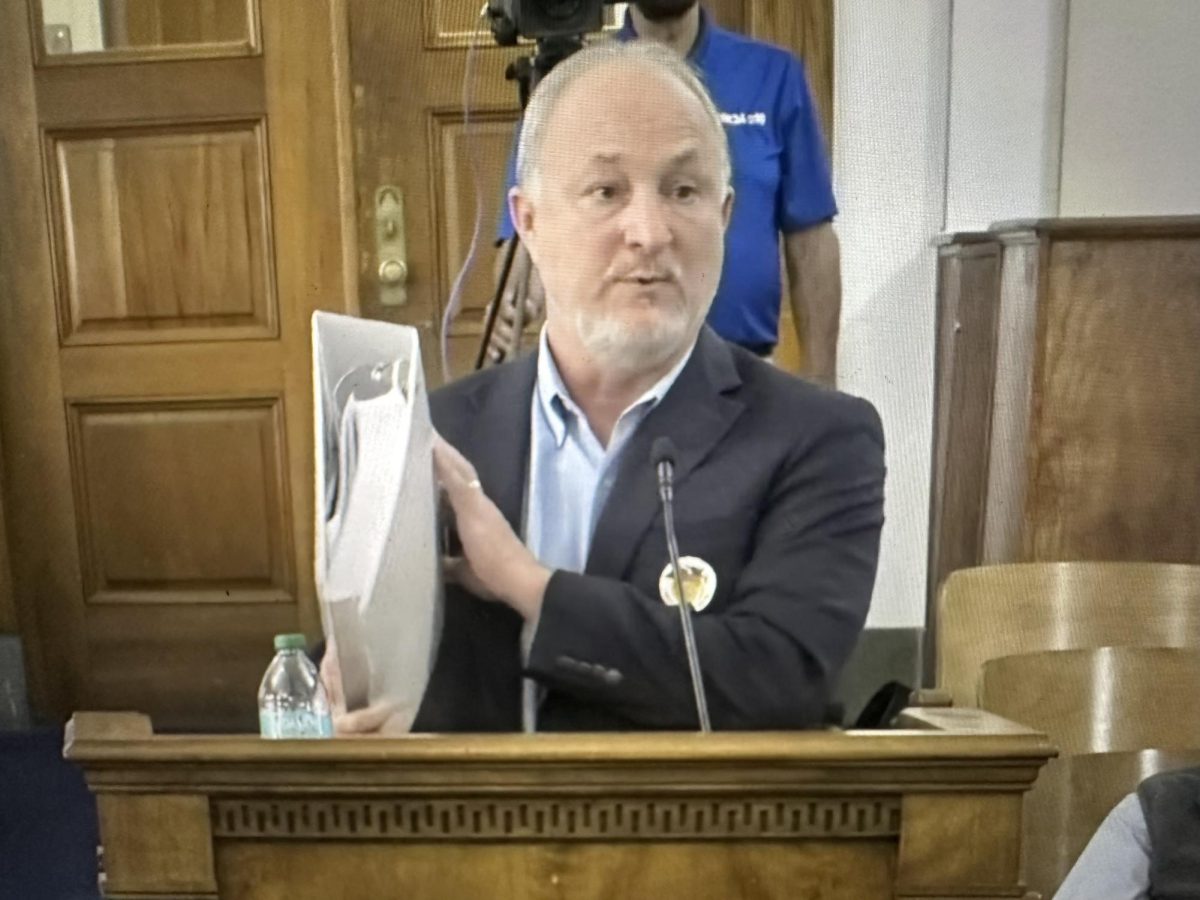
“I’m kind of waving the white flag here,” Kressin told fellow board members at the October meeting of the Downtown Business Improvement District, or BID. “Something’s got to give. It’s getting really bad.”
The board agreed with her and approved spending at least $105,000 on two new efforts to make downtown cleaner and safer.
Under the BID, central business district property owners agreed to pay more in taxes to create a cleaner, greener and safer space for all who work, visit or live downtown.
As part of its mission, BID funded a late summer assessment of downtown conditions that showed needs were not being met. That report prompted the board to spend more money to tackle stubborn public safety issues that could undermine revitalization efforts.
Upon reviewing the report, the board approved hiring a new full-time outreach specialist to better manage and assist dozens of unhoused people who frequent the central business district.
The BID also is leading an effort to better train Bibb County sheriff’s deputies for more effective policing downtown by promoting higher engagement with the public and less complaint-driven enforcement.
“To be able to expedite this is huge,” Kressin said. “I just think that the quicker we can jump on this, the better.”

The BID already funds an annual contract of more than $600,000 for Block by Block ambassadors who clean the streets and assist people in the district that stretches between Riverside Drive and Oglethorpe Street, with other borders at Spring Street, the entrance of Carolyn Crayton Park, and Fifth Street.
In mid-August, Block by Block Project Manager of Outreach Services Chico Lockhart canvassed downtown over three days. He observed people roaming the streets, talked to them and assessed whether they were getting the help they needed.
Of the more than four dozen people he counted at one time, about 94% were unhoused, roughly 2% were panhandling and the rest were transients passing through.
In the two months since Lockhart’s observations, the numbers and the issues have increased, Kressin said.
The county’s continual clearing out of encampments along Riverside Drive, Emery Highway and other nearby hideaways appears to have increased the number of people sleeping on the city streets or carting belongings around, she said.
The board approved up to $100,000 over the next year to fund the new outreach specialist who will strive to build trust with the unhoused with daily relationship building.
“It’s a little odd, I think, to an extent, that this has fallen in BID’s lap,” Kressin said. “But I’m grateful that Block by Block has an ambassador program that does deal with this, because we do have a major issue which should stay on the forefront of everyone’s minds in future conversations.”
Macon-Bibb County has multiple organizations that assist the homeless population, but Lockhart’s assessment showed they work in silos with no full-time presence in the district.
Three years ago, United Way of Central Georgia launched the United to End Homeless initiative through a Negative Economic Impact Grant from the state of Georgia with a goal of “functional zero homelessness.”

United Way hired the Rev. Jake Hall to lead the countywide initiative and funded three other part-time coordinators to expand outreach efforts and conduct a comprehensive homeless count, United Way Executive Director George McCanless told The Macon Newsroom.
That program is being phased out under United Way’s umbrella.
“The grant concluded earlier this year, and unfortunately we weren’t able to sustain the program — both for financial reasons and because it extends beyond United Way’s primary focus on helping ALICE families avoid or recover from housing instability,” McCanless said.
ALICE stands for asset-limited, income-constrained, employed, or the working population that still struggles to make ends meet.
Macon-Bibb County recently approved up to $75,000 in Macon Violence Prevention funding to contract with Hall’s Root Analytics, a new business he formed Oct. 7.
The Macon Newsroom will share more about the contract once it’s finalized.
The BID report recognized the efforts of United to End Homelessness’ part-time counselors through the Brookdale Resource Center, but did not see evidence of downtown outreach.
“The fact that they don’t come down daily and only work with people in camps is a missed opportunity to build rapport and provide a solution for those who are chronically homeless,” the report stated.
In 2021, United Way partnered with the county to operate the Brookdale Resource Center’s transitional program to help individuals and families while they stay 90 days in a converted elementary school. The program evolved to include the Hello House temporary shelter. Last year, the facility assisted 727 people needing shelter, including 216 children from 95 families, according to its website.
Those in downtown needing shelter either do not have transportation to Brookdale, don’t want to abide by fixed hours or rules including no drugs or alcohol at places like the Salvation Army, or have no place to store their belongings which they don’t want to leave behind, the report showed.
“Many unhoused individuals prefer the outdoors because the police do not directly harass them and feel safer among peers, particularly with the ambassadors checking in on them and nearby social services,” the report stated.
Three women who routinely sleep on the streets told the researcher that they feel safer in the open where they can be seen and call for help. For safety reasons, some people do not like to sleep at night but slumber during the day when they’re less likely to have things stolen from them.

“There is a critical need for a clear system to distinguish between trash and belongings to avoid unintentional dispossession while maintaining public cleanliness” the report stated.
Lockhart also noted the shortage of public restrooms which leads to sanitation issues.
“Without accessible facilities, individuals will continue to relieve themselves in public, worsening health and sanitation in the alleyways,” Lockhart noted.
Block by Block ambassadors regularly pressure wash away human excrement and urine from the alleys, and the researcher noted there was no place for him to use a bathroom, either, without pretending to be a business customer.
The study included at least two-hour visits in the early mornings and evenings.
Nightlife safety efforts
While the number of unhoused individuals spiked after dark in the recent study, Lockhart also observed other nightlife issues the BID plans to address.
“When the bars and clubs were more active, many more people were hanging out on the sidewalks next to the bars. Most drank outside establishments, supplying themselves with their drinks instead of paying the prices in the bars,” Lockhard stated.
NewTown’s Erin Keller noted the late night party atmosphere.
“If anybody’s taken a ride down here at midnight, it’s getting Bourbon Street vibes,” Keller told the board. “It’s great. I think that a vibrant nightlife is a sign of a thriving downtown, but we also need to curate it to make sure that it is (orderly).”
NewTown Macon recently responded to business owner concerns about nightlife safety issues by hosting meetings with representatives of the Bibb County Sheriff’s Office.

Delays in response times can make business owners feel anxious and unsafe, Keller said.
As a result, the BID board agreed to move forward with creating a new Action Alliance to explore downtown safety, hospitality, culture and development planning.
The BID pledged to fund a quarter of the $20,000 for Responsible Hospitality Institute, or RHI, to lead the effort and bring in public safety consultants who have nightlife experience in San Diego, Atlanta and Charleston.
In 2019 through a Knight Foundation grant, RHI talked to downtown stakeholders and drafted a social economy strategy to maintain a healthy downtown.
Although the COVID 19 pandemic shifted focus to sustainability and resilience, the BID hopes to initiate RHI’s return for a three-month process to identify priorities and update its strategic recommendations to help downtown thrive.
RHI will be recruiting at least a dozen people to join the Action Alliance who participated in the original assessment five years ago. Organizers estimate the total time commitment for participants will be about eight hours over three months.
— Civic Journalism Senior Fellow Liz Fabian covers Macon-Bibb County government entities and can be reached at [email protected] or 478-301-2976.