
It’s time for your weekly trip to the grocery store. Instead of taking the car or catching a bus, you simply take a short walk down Second Street and are flooded with options: Two Piggly Wigglys, an A&P, Rodgers — all walking distance from your home. Each store is affordable and offers fresh food.
While this kind of shopping experience sounds like a dream for most Macon residents, this was life in 1930, according to Macon City Directories.
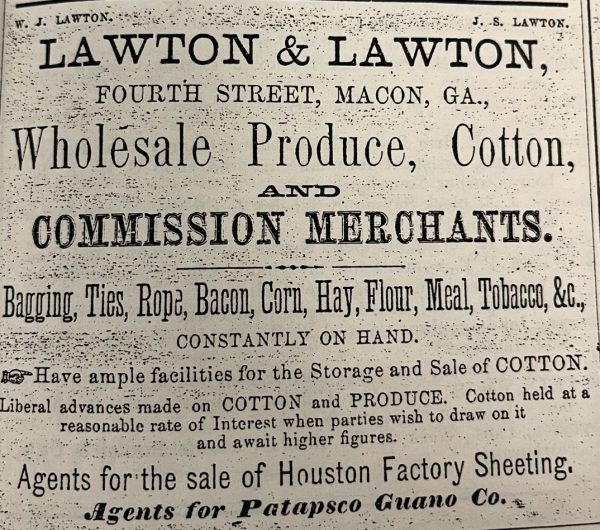
The directories as well as Groceteria, a website that documents the history of grocery stores all over the country, show Macon had over 100 grocery stores at that time. The majority of those stores were small neighborhood markets, tucked into communities where they were close enough for customers to reach on foot.
The decline in the number of local neighborhood markets in favor of larger supermarkets has been happening for decades and is a cause for food deserts and food insecurity in many cities, including Macon. Food deserts are usually low income areas with limited access to affordable and nutritious food.
David Gwynn is a professor at the University of North Carolina Greensboro and is the creator of Groceteria.com. Gwynn said the shift to supermarkets started gradually, with that model almost fully taking over the industry by the late 1950s, diminishing smaller stores.
“By that time, (supermarkets) started getting bigger and bigger, which is the main reason there became fewer and fewer of them,” Gwynn said. “That’s where you started seeing neighborhoods being more neglected and the food deserts developing.”
Pre-Supermarket Grocery Shopping
Before supermarkets became the norm, Gwynn said, grocery stores were usually small, neighborhood stores.
“They had to be small and located everywhere because people walked to the store,” Gwynn said. “They either walked or grabbed what they could take on the streetcar or whatever. So yeah, you had to have little stores in the neighborhood.”
Those traditional stores did come with some drawbacks. They offered less variety and often higher markups than modern supermarkets. A customer in a 2,000 square foot neighborhood market would not find dozens of brands or every ingredient on a shopping list. But what they did offer was proximity.
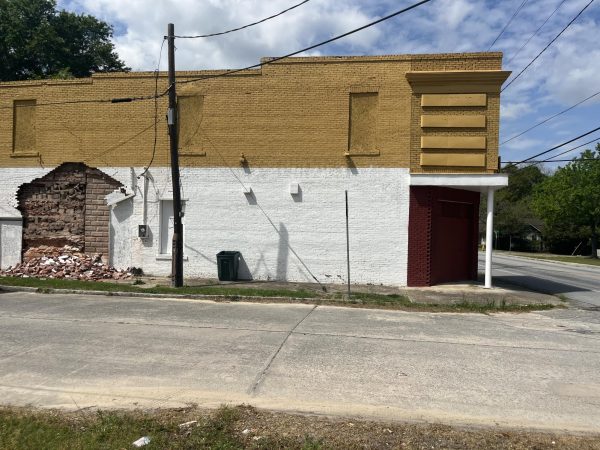
“The best thing again is, if you needed something, you could walk to the store,” Gwynn said. “If you needed something unusual, you might not find it there, but you could get (to the store).”
That tradeoff still shapes food access in Macon today.
Kaitlyn Hunter knows the challenge firsthand. Before buying a car last year, she often had to walk, catch the bus or rely on family to get groceries. Now married and raising a young daughter, she said grocery shopping has become even harder as prices have risen and her family’s needs have grown.
“Getting food right now is a little harder than if it was just myself,” Hunter said.
Before she had a car, Hunter said she sometimes walked to get groceries or had her aunt drive her when possible.
She usually makes three or four grocery trips a month and can spend around $200 on a trip.
Near her neighborhood, Hunter said there is a small store called Mike’s Supermarket on Houston Avenue. It is closer than a larger chain store and has reasonable prices, but like many smaller stores, it does not always carry everything she needs.
In her ideal version of grocery shopping, Hunter said food would be cheaper and smaller neighborhood stores would carry a wider selection.
“Access to more food,” Hunter said, describing what she would want to see. “These smaller grocery stores don’t have very many varieties. One day you’d be like, ‘Hey, I want to cook this,’ and then you go, and they don’t have it. And then now you’re going everywhere to find the ingredient that you need.”
Gwynn said that problem reflects a larger national trend. As supermarkets got larger, they also became more selective about where they opened, often prioritizing larger and more profitable markets. At the same time, urban renewal wiped out many Black business districts and neighborhood commercial areas, further reducing food access in lower income communities.
“Poorer neighborhoods, African-American neighborhoods, at least weren’t food deserts at that point,” Gwynn said, speaking of the early 20th century. “They might not have had the best stores in town, but they at least had stores.”
Finding solutions now is not simple. Gwynn said supermarkets are driven by profit, not public service, and small independent stores often struggle with higher overhead and limited buying power. He said delivery services can help some people, but not everyone has the technology or infrastructure to use them. Co-ops and nonprofit stores have also had mixed results.
One possibility, he said, is public support for stores willing to locate in underserved areas. Some cities have used subsidies and tax incentives to encourage supermarkets to open in food deserts. Still, Gwynn is not optimistic that cities will ever fully return to the old model of corner grocery stores.
“It would be nice if we could return to the full-service corner neighborhood grocery store, but that’s probably not gonna happen,” Gwynn said. “There might be some different variety of it in the future, but that’s yet to be seen.”
For Macon residents like Hunter, that future cannot come soon enough. The neighborhood grocery store may mostly belong to the city’s past, but the need it once filled remains very much present.
Historic Grocery Stores Living On
Around Macon, some traces of that golden age of grocery shopping still remains — not as stores — but as historic buildings.
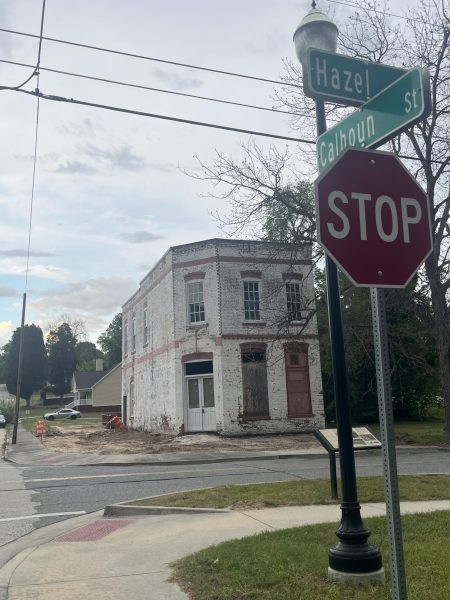
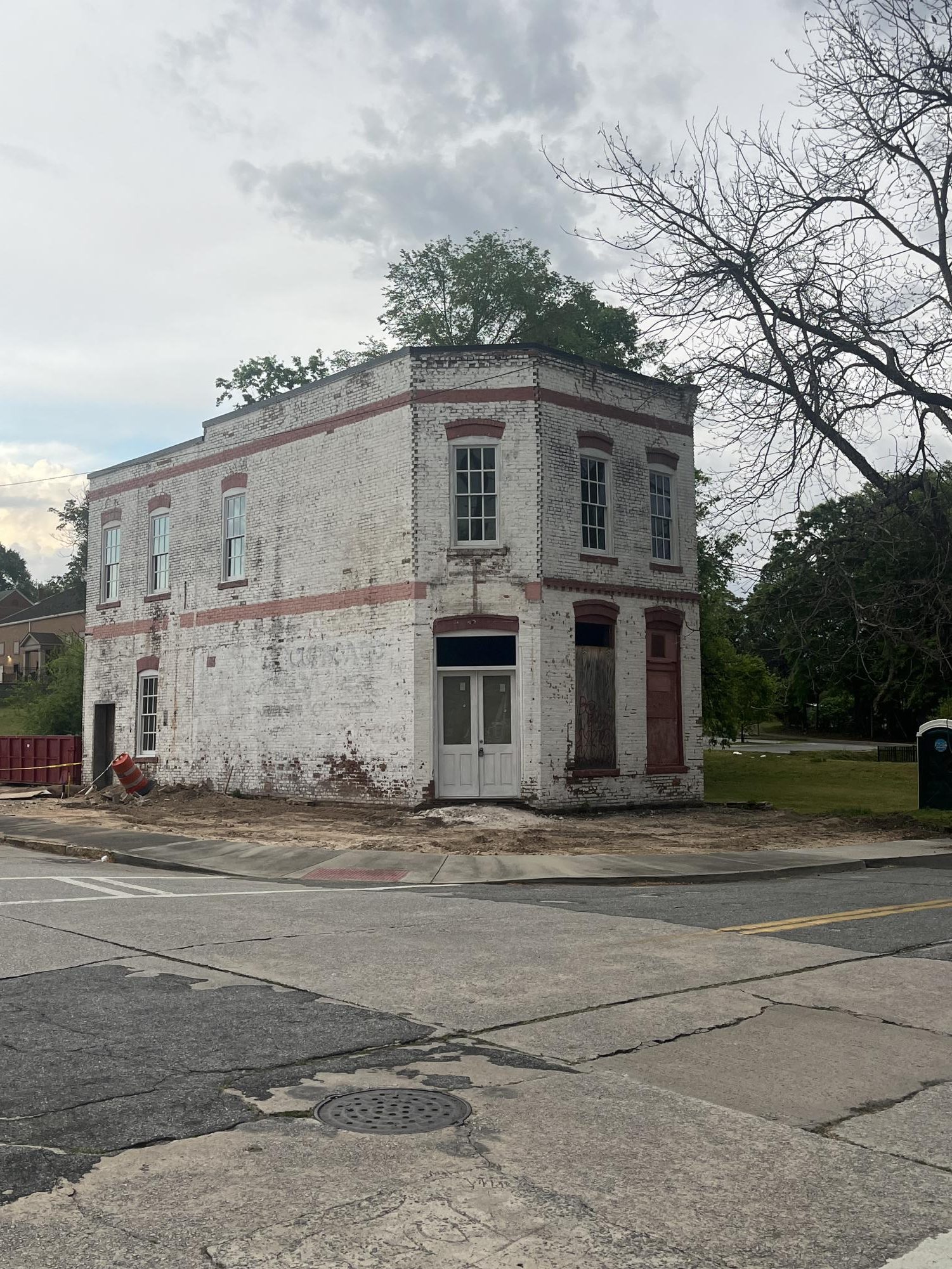
One former neighborhood grocery store once known as the Korner Kupboard in Beall’s Hill is now being renovated by Historic Macon and converted into two apartments. Emily Hopkins, executive director for the Historic Macon Foundation, said preserving buildings like that one is about more than saving some run down building.
“Preservation is central to our mission at Historic Macon,” Hopkins said. “Our mission is to revitalize communities by preserving architecture and sharing history.”
Hopkins said the organization originally hoped the building could remain a commercial space, and at one point explored the possibility of a restaurant with some grocery offerings. But as the project developed, converting it into rental housing made more sense. One of the units will be designated as affordable housing.
“For us, it’s important to save these iconic buildings that are part of the landscape of the neighborhoods that they’re in,” Hopkins said.
The project is expected to be completed by the end of the year, with tenants moving in afterward. Historic Macon is using historic tax credits to help make the renovation possible.
While the building will no longer serve as a grocery store, it still tells part of Macon’s larger story. The neighborhood markets that were once a vital part of every neighborhood may be gone, but the structures they left behind remain reminders of a time when daily necessities were built more directly into neighborhood life.