
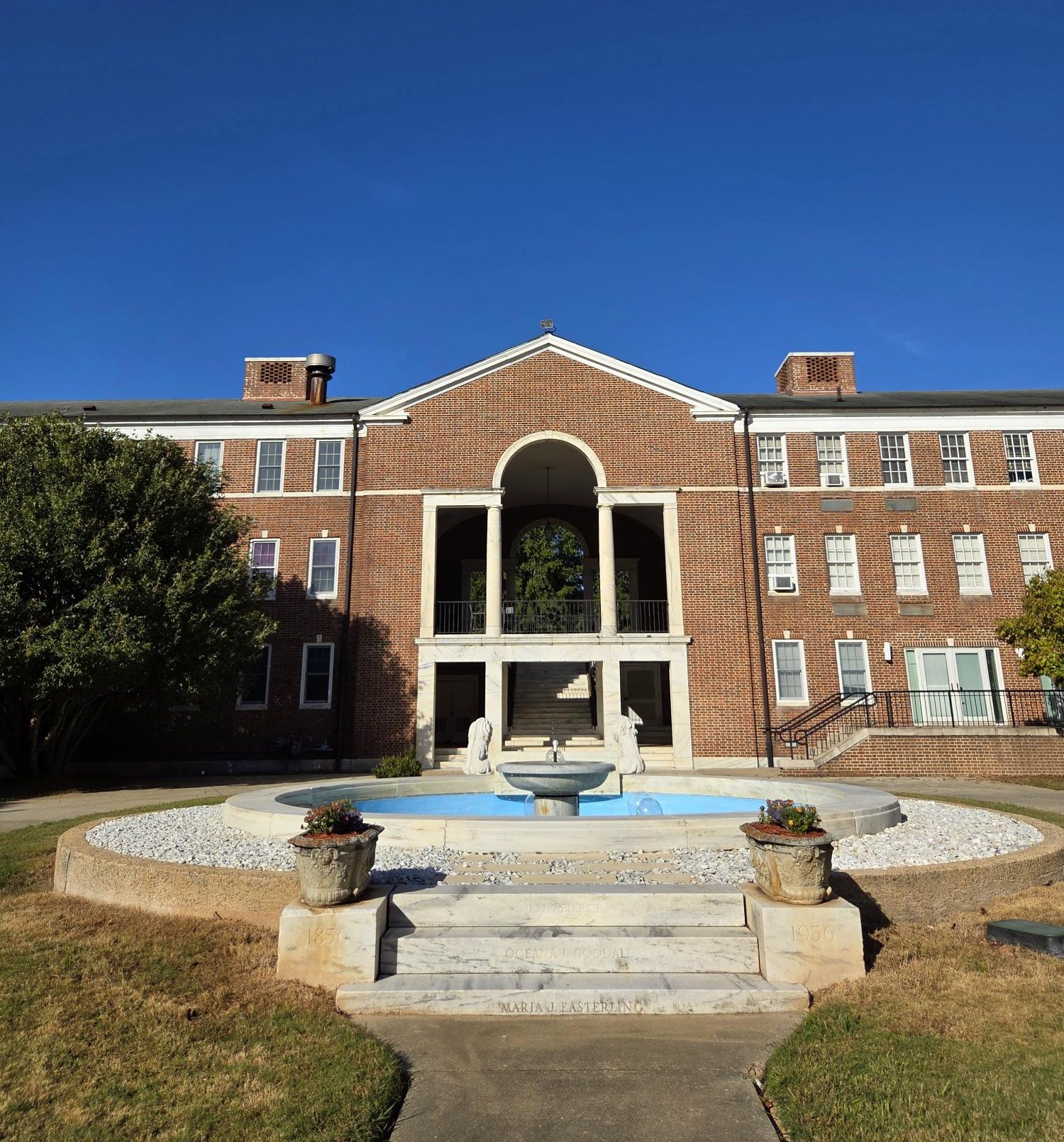
Only 31 women’s colleges remain active in the U.S., according to a 2025 Pew Research Center’s report. In the last two decades, nearly half of women’s colleges adapted to a co-ed student body or merged with other institutions, and between 1998 and 2022, four institutions permanently closed.
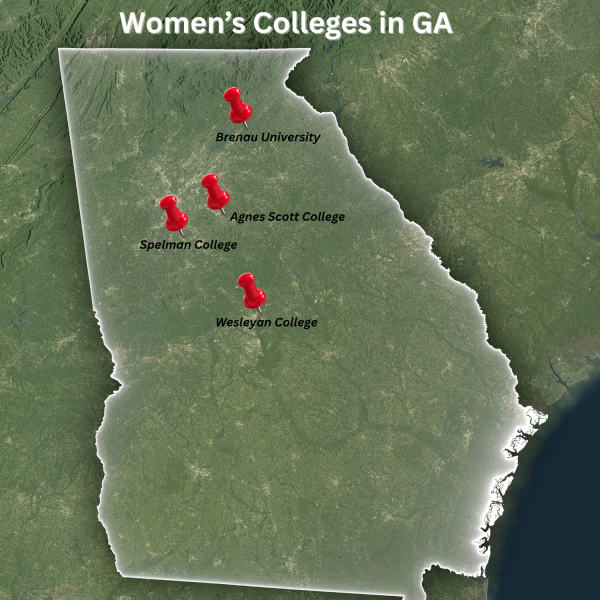
Within the dispersed colleges across the nation, Georgia is one state where many women’s colleges still reside. The Southern state is home to four women’s colleges, including one of vast historical significance as the first chartered school in the world to grant degrees to women.
Wesleyan College in Macon was founded in December 1836 as the Georgia Female College.
The college’s 26th President, Meaghan Blight, describes the institution’s longstanding operation continues through its mission of educating women.
“Right now, we’re seeing a deficit of women’s colleges, but part of the enrichment of Wesleyan’s enrollment is through its history,” Blight said.
Since 1839, the enrollment has excelled beyond its first admission of 90 young women. The college’s website lists approximately 506 current undergraduate students.
While the college thrives domestically, global attention also has brought a large international student body to its campus.
Blight said Wesleyan has seen these enrollment rates with its entry of many women from countries such as India and Bangladesh. Although record shows women’s colleges generally hold a small student body, Wesleyan’s student acceptance indicates a diverse pool of applicants.
So why choose a private women’s college?
During her visits to high schools in the Georgia region, Blight invites students to consider Wesleyan as a future endeavor through this question.
“It’s how I start my presentations. I tell them that Wesleyan is not a 400-student classroom that leaves them as a number. It’s a campus that promotes strong student-professor relationships,” she said.
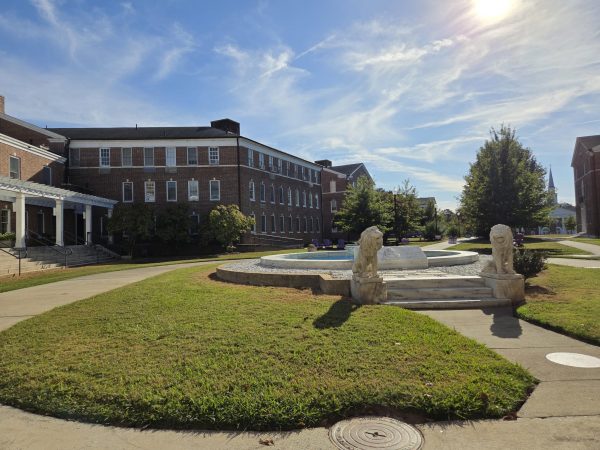
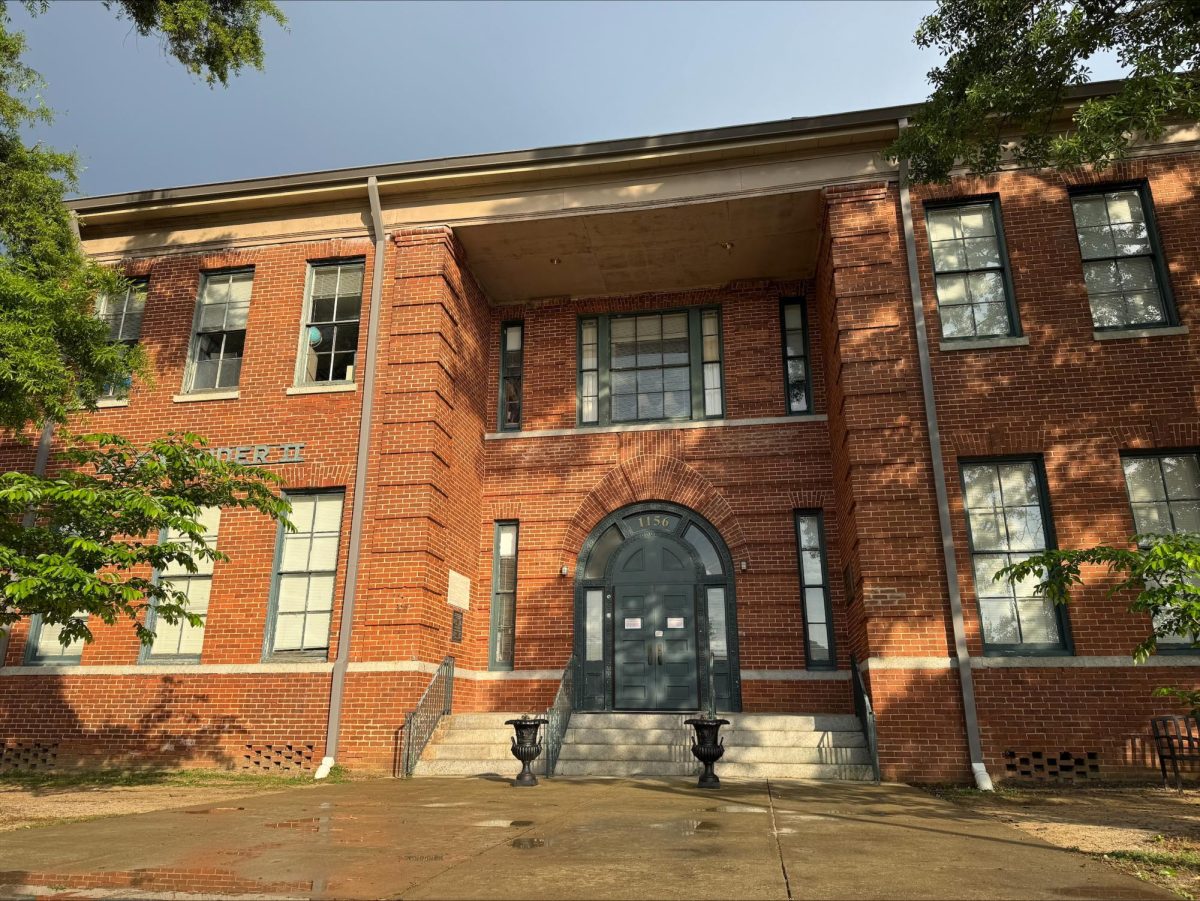
Wesleyan University’s student residence building known as Persons Hall.
(Delaila Quinn)
Since her induction as president in 2022, Blight admits the proudest aspect of working at Wesleyan is the faculty.
“One student can walk in timid and shy, but with the guidance of our faculty, they are equipped with skills and confidence,” she said.
As a measure to inspire students, the portraits of several influential graduates can be found throughout the campus buildings. Among the list is Neva Jane Langley, who became Miss America 1953. Viola Riss Napier who was the first woman elected to the Georgia House of Representatives. Toni Jennings, who served as the first female lieutenant governor of Florida. These prominent figures are only a few of the notable alumni of Wesleyan College.
“Wesleyan succeeds because of its history. And I and the faculty plan on preserving that,” Blight said.
Much like Wesleyan, the historical black women’s college in Georgia known as Spelman, has no intention in becoming co-ed.
A woman-empowering environment is just as crucial for Spelman College to sustain. The renowned institution offers a variety of academic pathways and is ranked as the top school for Black women earning PhDs in science, technology, engineering, and mathematics. On the national scale, it is one of two Historically Black women’s colleges in the U.S.
Spelman Director of Admissions Chelsea Holley described by email that their mission centers on providing higher education to promote gender equity and leadership through community.
“Our graduates are consistently leaders in medicine, law, technology, education, and the arts, and we are especially proud of our national leadership in producing Black women in STEM fields,” Holley stated.
She emphasizes Spelman aims to prepare students with the qualifications for leadership opportunities Black women have historically been underrepresented in. It is through the embracement of cultural affirmation and academic vitality among their student body that they have countered the challenges in maintaining enrollment.
The impact of women’s colleges lies within its history. Georgia is home to institutions that have marked a pivotal change in U.S. history and continue to embrace their commendable establishments in an evolving world.
“We view the strength of our mission not as something to be reimagined, but as something to be sustained, invested in, and celebrated,” Holley stated.
Alongside Wesleyan and Spelman College, Brenau University in Gainesville and Agnes Scott College in Decatur join in designating Georgia as a national leader in women’s higher education.