

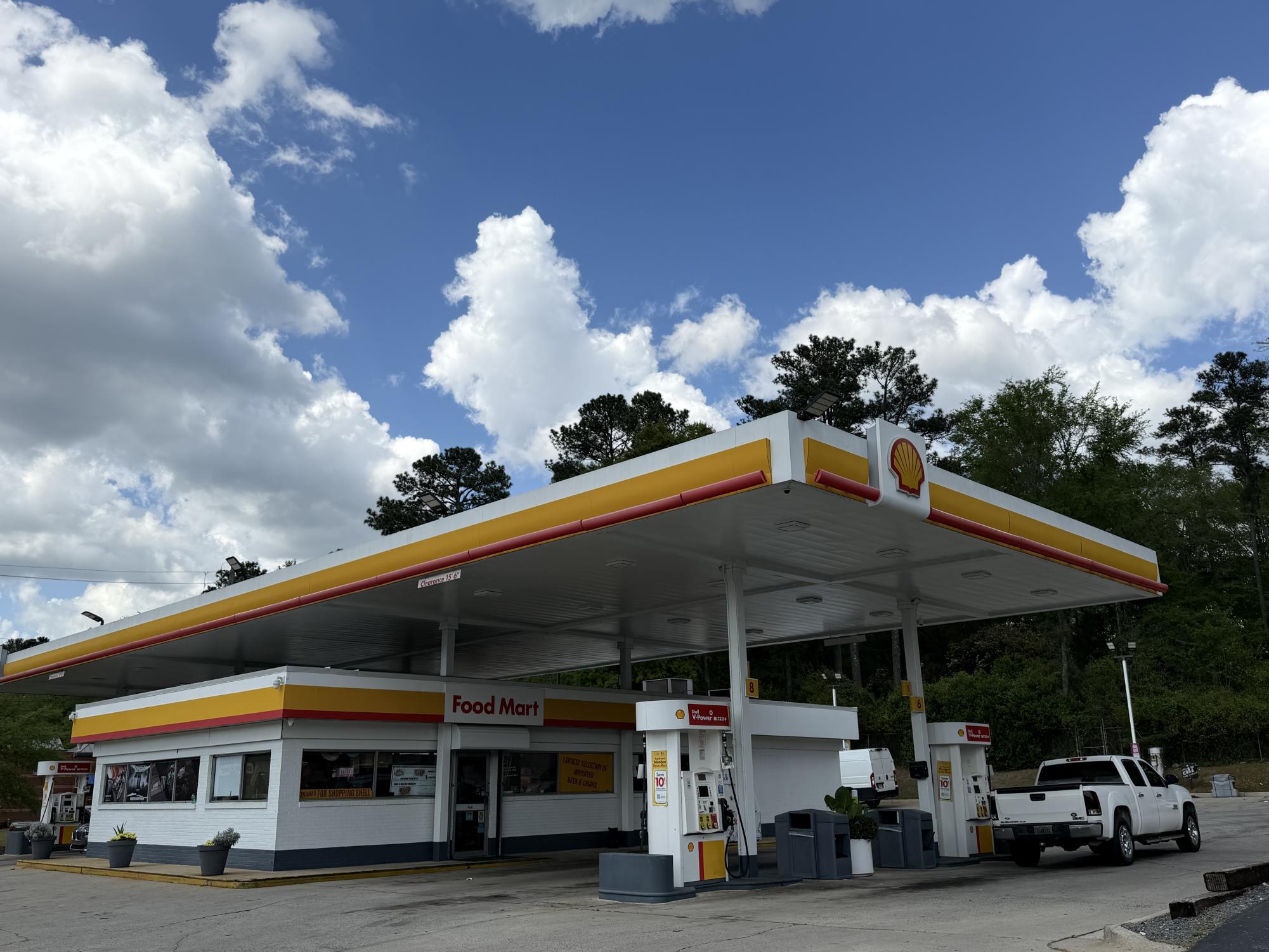
Millions of Americans rely on gas. Recently, there has been a spike in prices across the nation. According to AAA Fuel Prices, the national gas average jumped one dollar in one month. According to the American Automobile Association, the national average is $4.14 per gallon.
Chas Pridgen, 28, has lived in Macon, Ga. for 10 years and has been a car owner for 12 years. Pridgen has faced financial struggles since the gas prices have gotten higher. “I’m on a pretty tight budget these days, since I’m under the delusion that I can buy a house someday,” Pridgen said. He later stated that gas prices are too high for “no good reason.”
There is a reason. On Feb. 28, the United States and Israel launched airstrikes on Iran after weeks of buildup and conflict, which marked the beginning of Operation Epic Fury. According to the White House in Washington, the objective of President Trump is to ensure Iran does not acquire a nuclear weapon. In turn, Iran closed the Strait of Hormuz. But there’s a misconception, the United States is not dependent on imported oil for its gas.
Dr. Tyler Parker, Assistant Professor of Political Science and International Affairs at Mercer University, has studied Arabic and the Arab world since 2011. His focus on the Persian Gulf and the Arabian Peninsula came later in 2018. “The United States only imports about 5%-10% of its crude oil from the Persian Gulf,” Parker said.
However, Parker states the real issue is that oil on the international markets is bought and paid for largely by U.S. dollars. He states that though we are not reliant on the Gulf, this issue fits into a broader global commodity market in which the United States and the U.S. dollar have a big role. As Robert Rapier reported in Forbes, “Because the U.S. exports oil to the global markets, it’s priced globally by traders bidding for oil.”
This is not the first time the United States has had issues internationally with oil supply and or production. “In the 1970s, there was a boycott of selling oil and gas to supporting states of Israel, which included the United States… and we did see an increase,” Parker said.
Parker encourages people to just look at our political state. “I would say that the economy is politics, and politics are the economy. These are interlinked in terms of global supply chains, in terms of goods and services, and people.”