
Papers rustling, casting directors whispering to one another. Self-tapes for auditions. You’re at home set up with two white lights shining to light up either side of your face. Whether you’re doing an in person or recorded audition, the nerves are still the exact same. Most actors walk into wanting it all, but they’re also all thinking, “what if I don’t get the job?”
In the acting world, reality hits pretty quickly. And the reality is that hundreds of people may want the exact job you are auditioning for, and a lot of those people may be just as good as you. It’s hard to not get discouraged. Especially if you keep getting rejected by casting directors – or worse – you don’t hear anything back.
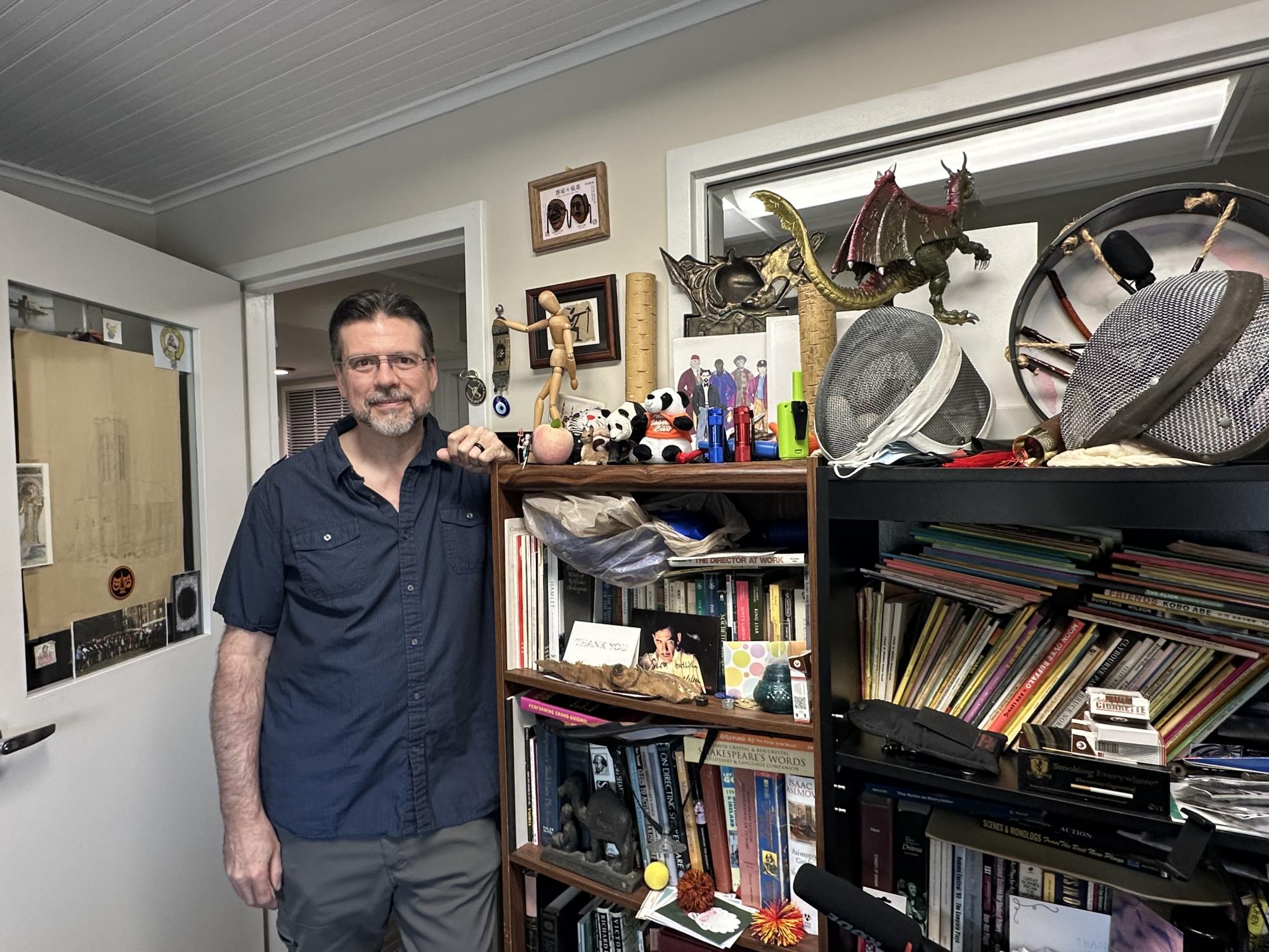
Scot Mann, professor of Theatre at Mercer University, has been in the acting business for over 20 years. Mann has a Master of Fine Arts in Shakespeare Theatre from the University of Alabama. He specializes in combat and is president of the Society of American Fight Directors.
Mann, like any other actor, has faced rejection, but he uses his experience to inform students on their common mistakes when auditioning.
“The biggest issue that most actors have is the concept of themself when they walk into an audition,” Mann said.
Most believe that they need a good monologue to wow the casting directors, but the truth is it just needs to be delivered as well as you can embody that character while still being yourself.
“I would book one role for every 12 to 15 auditions,” Mann said.
While walking into auditions with nerves is normal, it puts actors in a position where they think they’re showing up as a bother rather than a solution to a casting director’s problem.
“My biggest advice is for people to think about the fact that they’re the solution to someone else’s problem, they’re not the problem,” Mann said.
On the other hand, there are young people looking to become professional actors, like Ivana Bugg, who is a 25-year-old aspiring actress living in Atlanta. She has been in three short films and is currently working on a feature series.
Like other young actresses, Bugg has faced numerous rejections. Though many are met with silence, she said some come with fair reasoning.
After auditioning to be the love interest for a film, Bugg was rejected. She booked a different film and happened to see the man on set who worked with the casting directors in the love interest film. “He said, “‘I’m like 5 ‘6 and you would have been my love interest’ and I’m 5′ 8,” Bugg said.
Nowhere in this story was Bugg told she is not a great actress, instead, she was not physically meant for that role. Bugg’s perspective changed as a young actor afterwards.
“You can’t think that you’re not talented just because they want a different look,” Bugg said.
Bugg is not the only young actress who has faced audition obstacles. Tiara Watkins is a Mercer University ‘21 graduate who is an aspiring actress, but she is currently taking a break from auditioning.
Watkins had some tips on how to approach rejection within the professional acting world.
“Just trying to stay true to what you enjoy about it. Doing it because you like it. Not because it should be the stressful thing that you hope to make money from one day,” Watkins said. “Also, make projects with your friends. That’s really what is bringing a lot of joy for me.”
Watkins is currently editing a short film that she wrote and starred in. She uses her free time to let her creativity as an actress flow with low stakes, though she may never know where her freelance work will take her.