
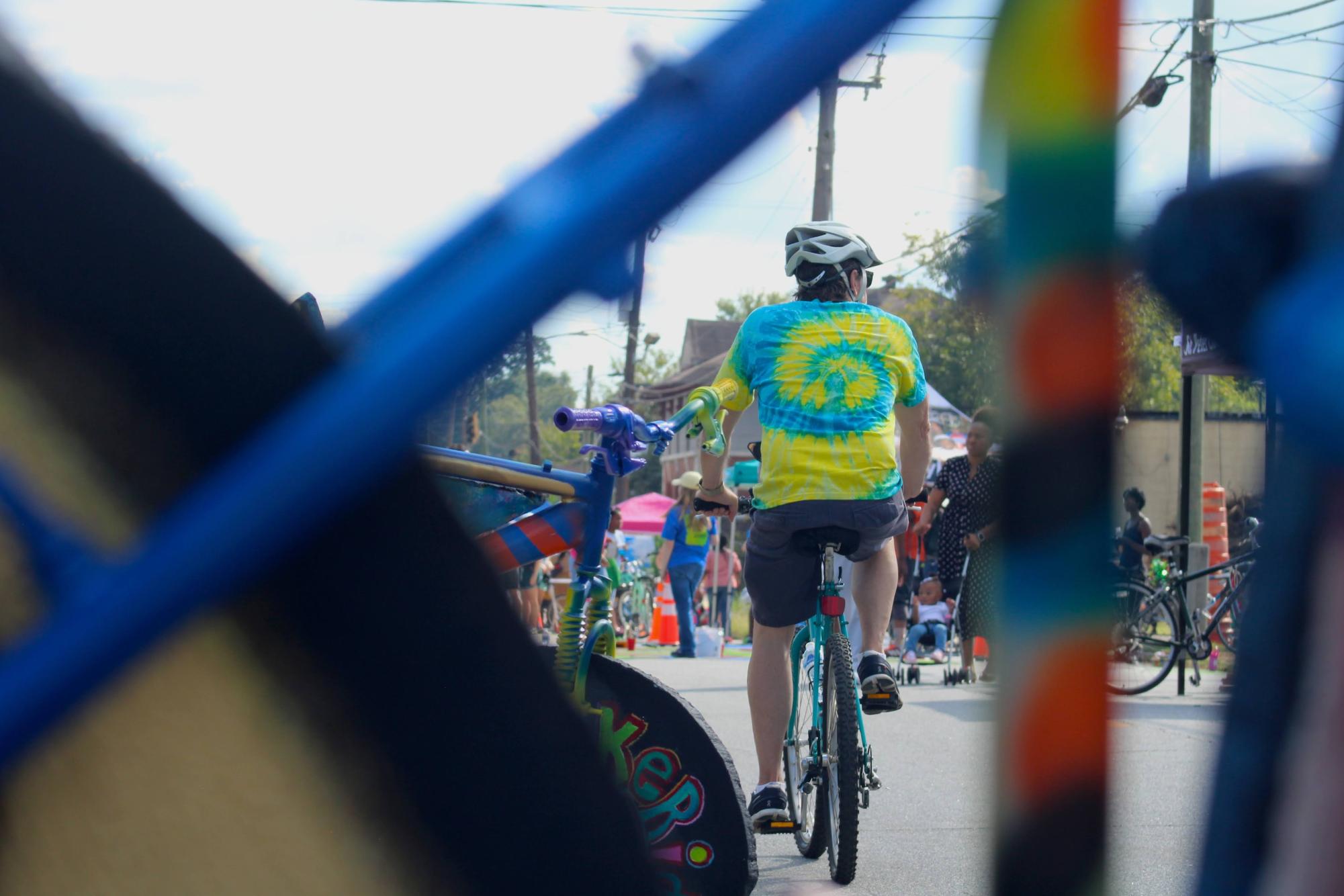
Jeff Young, a sales manager for Bike Tech Macon, said that his dream for Macon would be a completed Ocmulgee Heritage Trail that connects downtown to north Macon. There are already “a lot of rideable” stretches of road in Macon, he said, but because they are isolated, they are more like islands in car-heavy traffic than they are interconnected, traversable areas.
“There’s always that one person who’s in such a hurry,” Young said about how motorists interact with bicyclists on Macon’s roadways. “It’s such an inconvenience for them to wait to pass safely that they will try to force something that’s not safe.”
Improving pedestrian and bicyclist infrastructure in Macon has been a focus of various non-profit groups like Bike Walk Macon and Macon-Bibb County’s Pedestrian Safety Review Board, which passed a “Vision Zero” initiative in January 2021. “Vision Zero’s” purpose was to “eliminate traffic fatalities and serious injuries,” according to the ordinance passed creating the review board.
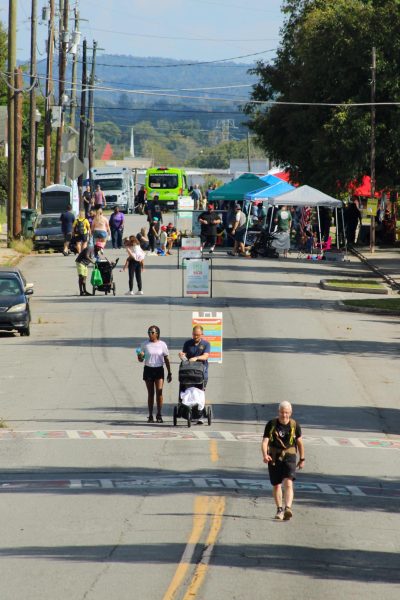
The county passed a “Complete Streets Policy” in 2021, which was modeled after similar legislation across the country. These policies are meant to compel governments to consider all forms of transportation as they repave and construct new roads. Among the tools available to city planners to make a roadway “complete” are bike and bus lanes, wheelchair-accessible sidewalks and crosswalks. When designed and implemented correctly, these infrastructure changes can promote safe travel while cutting down on car use.
When the Complete Streets Policy was passed in 2021, it was meant, in part, to inform decisions made by the Macon-Bibb County Commission as it resurfaced county roads, with a special eye on how the existing lanes could be reconfigured with pedestrian and cyclist safety in mind.
Another provision in the policy gave Bike Walk Macon and other interest groups an advisory role through which they could weigh in on proposed infrastructure changes, though the collective had no voting or veto powers.
Rachel Hollar Umana, the executive director and founder of Bike Walk Macon, said she had worked on putting together the Complete Streets Policy since 2016, five years before it was codified.
“We worked really closely with our local engineering office to draft a policy, and then we’d redraft a policy and we’d look at other policies that other cities had passed,” Hollar Umana said.
Persistent problems
Despite the policy’s intentions, one of the problems it was designed to alleviate – pedestrian and bicyclist fatalities – continued. From 2021 to the end of 2024, there were 57 pedestrian and bicyclist deaths caused by motorists, according to The Macon Newsroom. While that total was 90 fewer than the same statistic between 2014 and 2018, Young, who is an avid road cyclist and who has friends who have been hit by motorists while cycling, said that the progress made in the three years he has lived in Macon was, “like watching paint dry.”
“I know it’s happening, it’s just very slow,” Young said.
Hollar Umana said since the ordinance’s passage, there was little ground gained in putting together a process through which the newly formed Complete Streets Compliance Committee could make recommendations to the county.
“We passed the policy, but then it took some time of, like, ‘Okay, now that we’ve passed it, how do we implement it?’” Hollar Umana said.
In August, the Macon-Bibb County Board of Commissioners voted to amend the Complete Streets Policy the same governing body had passed in 2021. The amendment was introduced by Mayor Lester Miller and dissolved the non-voting segment. The move left Bike Walk Macon, among other groups, unable to offer their concerns and ideas without having to “contact the Clerk of Commission to be added to the agenda.”
Commissioner Stanley Stewart, who voted for the amendment, said he had been unaware of how the language in the legislation would impact the non-voting advisory board until after the change was made.
“I went myself personally to the very next Complete sSreets meeting,” Stewart said. “And I wanted to make sure I was there to support Rachel (Hollar Umana) because I’m a firm believer in everything Rachel does for our community.”
Hollar Umana said that she did not expect to see bike lanes, crosswalks and lighting on every stretch of repaved roads, only that there would be a review process for those projects so that any small, incremental improvements that could be made, would be made.
Motorists’ behavior is a main driver of unsafe conditions on the roads outside of downtown because in areas that have higher speed limits, bicyclists can easily hold up traffic, Young said. While infrastructure improvements should not be considered a silver bullet for the issue, there would need to be a “major cultural shift” among drivers and cyclists for the existing infrastructure to work today, he added.
Shifting gears
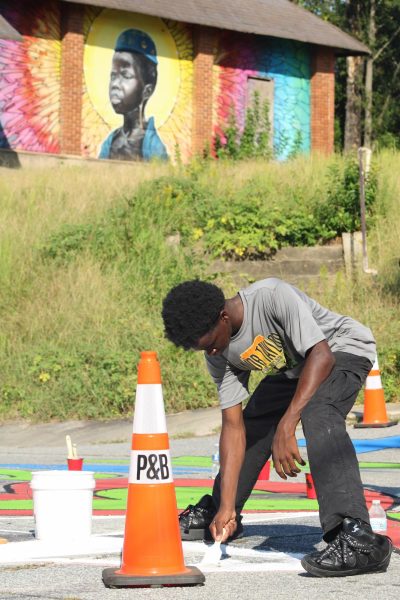
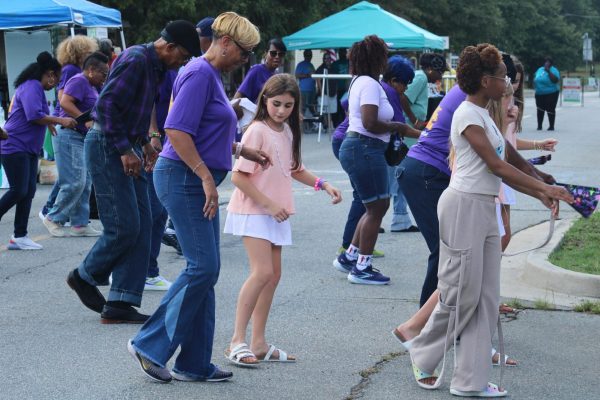
Part of that cultural shift, Hollar Umana hopes, may come from Open Streets events that teach people to, “reimagine how our streets could be used a little differently if they were more friendly and welcoming to everybody that uses them.” Bike Walk Macon hosts multiple such events each year, closing off streets to cars and opening them up solely to bicyclists and pedestrians.
Outside of those large events, Bike Tech Macon and Bike Walk Macon each host bike rides around Macon throughout the year that are meant to promote the bike-riding community, and to teach new riders how to navigate the downtown area without a vehicle. On a wall of Bike Tech Macon’s shop, a map of Macon depicts the time it takes to travel on a bike from the shop. For much of downtown, including a small area on the eastern side of the Ocmulgee river, the map shows that it would take less than 20 minutes to get from the corner of Second Street and Arch Street.
But for now, Hollar Umana said she thinks that unless the roads the city repaves in the next year are designed with the complete streets considerations in mind, the vision for a more interconnected city may be delayed for decades.
“It’s unlikely that we’d get a lot of opportunities to go back and fix them or just design them differently until it gets repaved again, which unfortunately is usually about 20 years,” she said.
Yet she has hope that the design process will not exclude the complete streets policy entirely, despite her organization no longer acting in an advisory role and the softening of language in the legislation.
“There’s still a very strong, Complete Streets Policy that we have, and there’s still a commitment for Macon-Bibb County that says, ‘We need to make our roads safer and better for everyone that’s using them,’” Hollar Umana said.