

Macon, once a thriving industrial city, bears many other marks of its past. Driving through downtown, historical monuments stick out like sore thumbs. Water towers, grain silos, and a 95-foot coal tower fill the downtown skyline and stand tall as a reminder of Macon’s mechanical age.
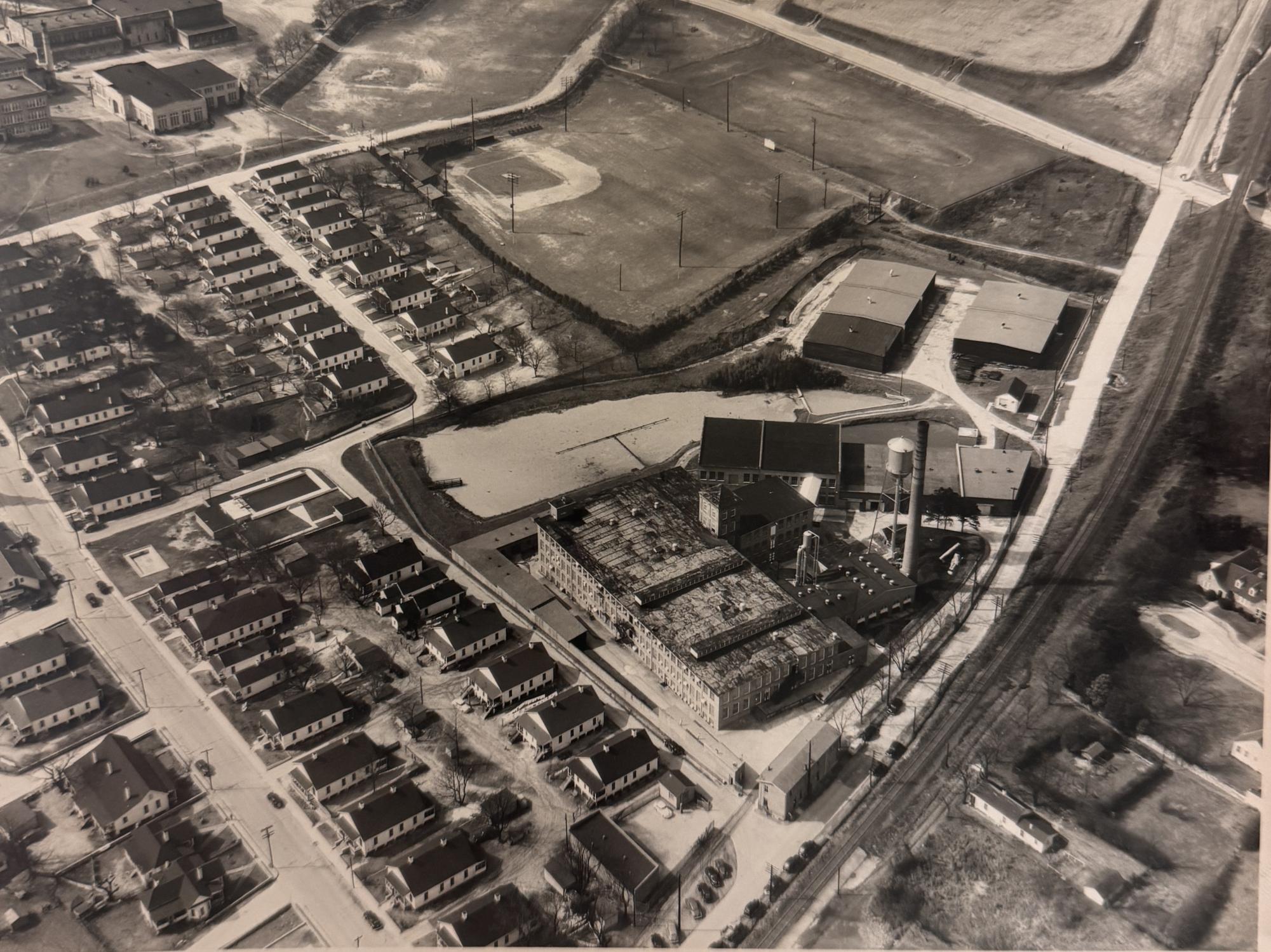
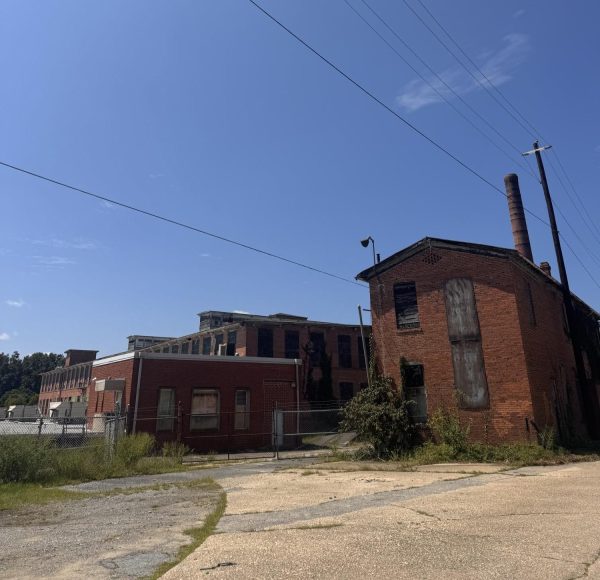
Some pieces of the past embedded in Macon are a little more inconspicuous. Tucked into the intersection of Roff and Holt Avenues is the last standing textile mill, according to the Washington Memorial Archives.. Like a raised hand from a nervous school student, a smokestack stands almost unsure of its place in the context of modern society as a mark of the once distinguished Willingham Mill.
Reimagining the past
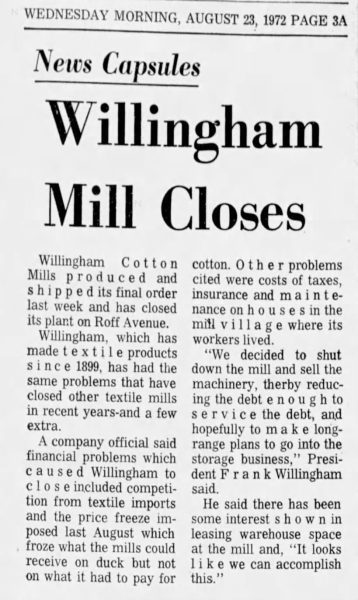
The Willingham Mill, built in 1899, is the last of its kind in Bibb County. The most significant of the other mills was Bibb Manufacturing Company that owned four mills in total. In 1923, according to The Macon Telegraph archives, Macon textile mills transformed 75,000 bales of cotton a year, cementing Bibb County as a powerhouse for the state in the textile industry before the entire industry slowly shifted overseas. Willingham Mill in particular specialized in making duck cloth, a cotton or linen-cloth like canvas.
Spreading across almost four acres, the mill property was outfitted with a mill building complete with tall arched windows of multiple stories to maximize sunlight a boiler house, smokestack, engine room, water tower, warehouses and shipping bays, lumber and machine shops, and office housing. All these structures are mostly abandoned and have since forfeited their function when the Willingham Mill shut down for good in 1972, according to The Macon Telegraph archives. During its peak, 550 people worked at the mill making it one of the biggest businesses in Macon in the first half of the 20th century.
The area surrounding the factory was known as the mill village, according to the Washington Memorial Library archives. Within the mill village, workers lived with their families and raised their children in low-cost housing.The village acted as a community of its own, and almost all mills had a village of homes and stores around them. From a business perspective, a mill village was a way to maintain a stable, disciplined workforce and ensure the company had oversight at all times.
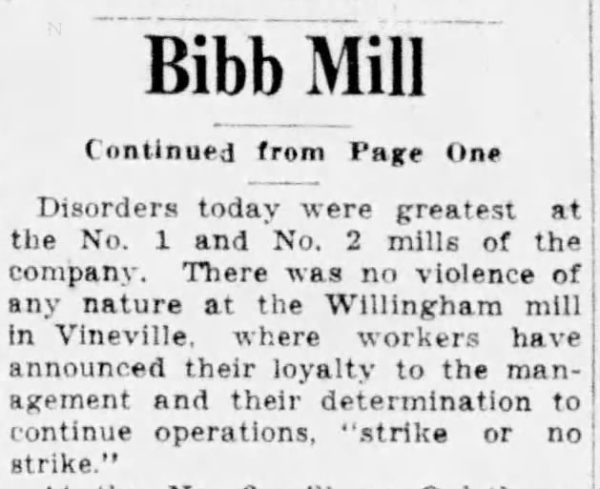
However, the seemingly tight grasp and control on daily lives the mill had was not a burden for the workers of the Willingham Mill, according to several reports found in The Macon Telegraph archives. As labor strikes over worker conditions plagued the textile industry in the 1930s, Willingham Mill stood unmoving in the chaos and operated as usual. On Sept. 6, 1934, The Macon Telegraph wrote that an organizer of the United Textile Workers of America, J. Ralph Gay, who spearheaded several significant strikes in Macon said, “I have been asked questions about what I was going to do about the Willingham Mill. I consider Mr. Willingham one of the whitest and cleanest textile owners in the South. If all owners were as fair to his employees as he is, there would be no need for strikes.” A different textile worker reported, “That man is the best man to work for. The workers there are satisfied. They won’t strike.”
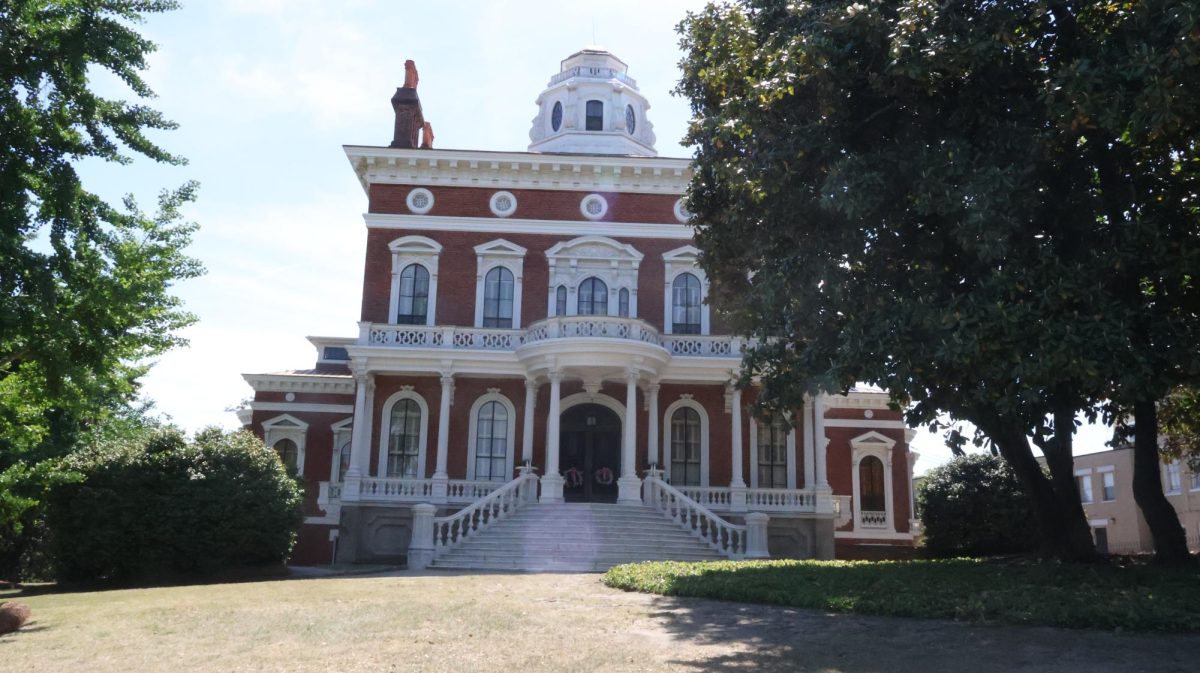
The praise of the mill’s owners begs the question: who are the Willinghams? If the name seems familiar, you may recognize it. It’s seen on Mercer University’s campus at Willingham Chapel, along 7th Street in downtown you see Willingham Sash and Door, on College Street sits the ornate, Italianate style Mead-Cubbedge-Willingham House once owned by the Willingham family, and you might have ventured on to Willingham Street in East Macon. All of these places point to the widespread influence of the prominent Willingham family. Described by renowned photojournalist and documentarian, Lewis Hine, the Willinghams were “one of the richest families in the section.”
Meet the Willinghams
The Willinghams escaped to Macon via wagon train in 1865 after being chased out of their large rice plantation in South Carolina by General Sherman and his army during the infamous March to the Sea, according to Brian Smith, a descendant of the Willingham family. After moving to Macon, Benjamin Willingham, the head of the family, got involved in the cotton industry as a cotton broker, owning a warehouse off what is now Martin Luther King Boulevard. Benjamin and his wife Elizabeth had 12 children, and nine were boys. The Willinghams were the poster children of tight-knit Southern families that prospered and seized opportunity and triumph amidst postwar disorder.
“When you think about how they came here after the war with nothing, and built all this — that’s powerful,” Smith said.
As a very successful entrepreneur, Benjamin Willingham encouraged all his offspring to get involved with one or more of the family’s enterprises. In fact, according to Washington Memorial archives, not only did the Willingham offspring become life-long business partners, they also all lived within blocks of each other on Orange, College, and Bond Streets in downtown Macon. From their business endeavors to daily family activities, the Willinghams were very intertwined with the inner workings of Macon itself.
“The Willingham family had their hands in all of it — textiles, lumber, banking. They were part of building this city,” Smith said.
It would be Benjamin’s two sons, Calder and Broadus Willingham, that would follow in his footsteps in the cotton industry and open the Willingham Mill shortly after Benjamin’s death in 1898. Ownership of the mill was passed down through several generations of Willinghams until its final days. The man who received the high praise during the height of the strikes in the 1930’s was Broadus, the president of the mill at the time.

Beyond the physical relics, the Willingham family’s influence remains in Macon carried on by Brian Smith, the great-grandson of Osgood Willingham, one of Benjamin’s nine sons. Brian Smith operates Willingham Sash and Door — the same company his great-grandfather, Osgood, along with his brother, Broadus, opened in 1891 with a family friend as an asset to the Willingham’s local cotton empire. Smith has been working at the company since he was 12 years old, from sweeping floors to working on projects to now owning the company. He says he upholds the high standards of his Willingham ancestry.
When asked about his strong Willingham roots, Smith responded: “It just makes you feel good. I’ve always loved Macon… it makes you feel proud.”
The Willingham Sash and Door is involved in historical rehabilitation and millwork for the entire Southeast region of the country. They specialize in crafting and supplying custom wood doors, windows, and millwork for residential and commercial projects.
“We’ve been doing this work for generations… still in Macon, still doing what they started in the 1800s,” Smith said.
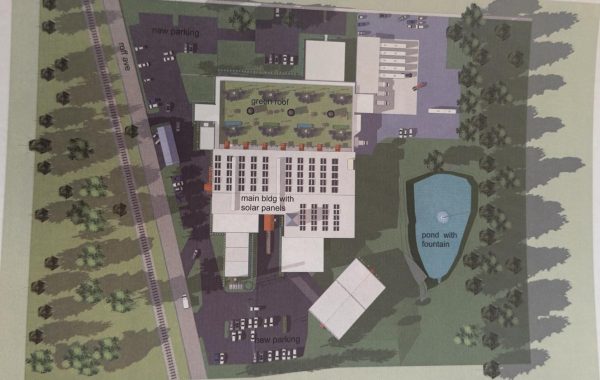
What does the future have in store for the structure?
Many Maconites value these portals into the past that are spread around the city like the Willingham Mill. Through Facebook groups, people share memories and photographs of Macon’s “good ol’ days” creating a camaraderie with their ancestral past. This value reflects strongly through the community with the many preservation efforts to protect these places.
“I’d love to see the old Willingham Mill saved. It’s a piece of history — my family’s, but also Macon’s,” Smith said.
A piece of the property is still in use today as storage for the U.S. Postal Service. In 2014 and again in 2020, plans were drawn up to preserve and utilize the Willingham Mill space. Ideas for the space included residential spaces, a satellite campus for the Savannah College of Art and Design, and/or corporate offices. The most promising was the idea of transforming it into the ‘Willingham Lofts.”
“Architecturally, it’s a great candidate for adaptive reuse — the large windows, high ceilings, and industrial scale make it ideal for housing or studios,” Nathan Lott, the Executive Director of Historic Macon, said.
However, long-lasting environmental concerns on the property from its years of industrial use, like the contamination from decades of burning coal from the smokestack, factored in with the underdeveloped surrounding area has meant the plans fell through, according to Lott. As the last mill standing, the structure has proven its resilience through time– withstanding strikes and demolition from neglect.
“Its preservation matters because it represents a key era of Southern industry — when cotton from the fields became finished goods in local mills,” Lott said.
Macon places a coveted value on its rich history. The home of soul takes on more meanings than simply the rhythmic, toe-tapping tunes of Otis Redding songs. Soul lies in the roots that make up the vibrant fabric of Macon’s history, and the Willingham Mill is a window into that history.









Jamie Marks • Nov 17, 2025 at 6:06 am
I love this building. It would be amazing to see it turned into artist lofts similar to what was done in Los Angeles at The Brewery Lofts (check out their website – no links allowed here) . I don’t understand why most of the lofts being converted to residences are apartment rentals. It strips them of their uniqueness with often the only features remaining being high ceilings and floor to ceiling windows. I’d like to see more of them sold as coops or condos, but now I’m getting off track!
Liz Riley • Nov 14, 2025 at 5:26 pm
This isn’t the last mill in Bibb County. There is also one in Payne City. Also, the Willinghams were not “chased” by Sherman. They did move to South Georgia to be safe from the war. They also didn’t come here with nothing . They were a wealthy family. I am also a Willingham and have records to support this.