
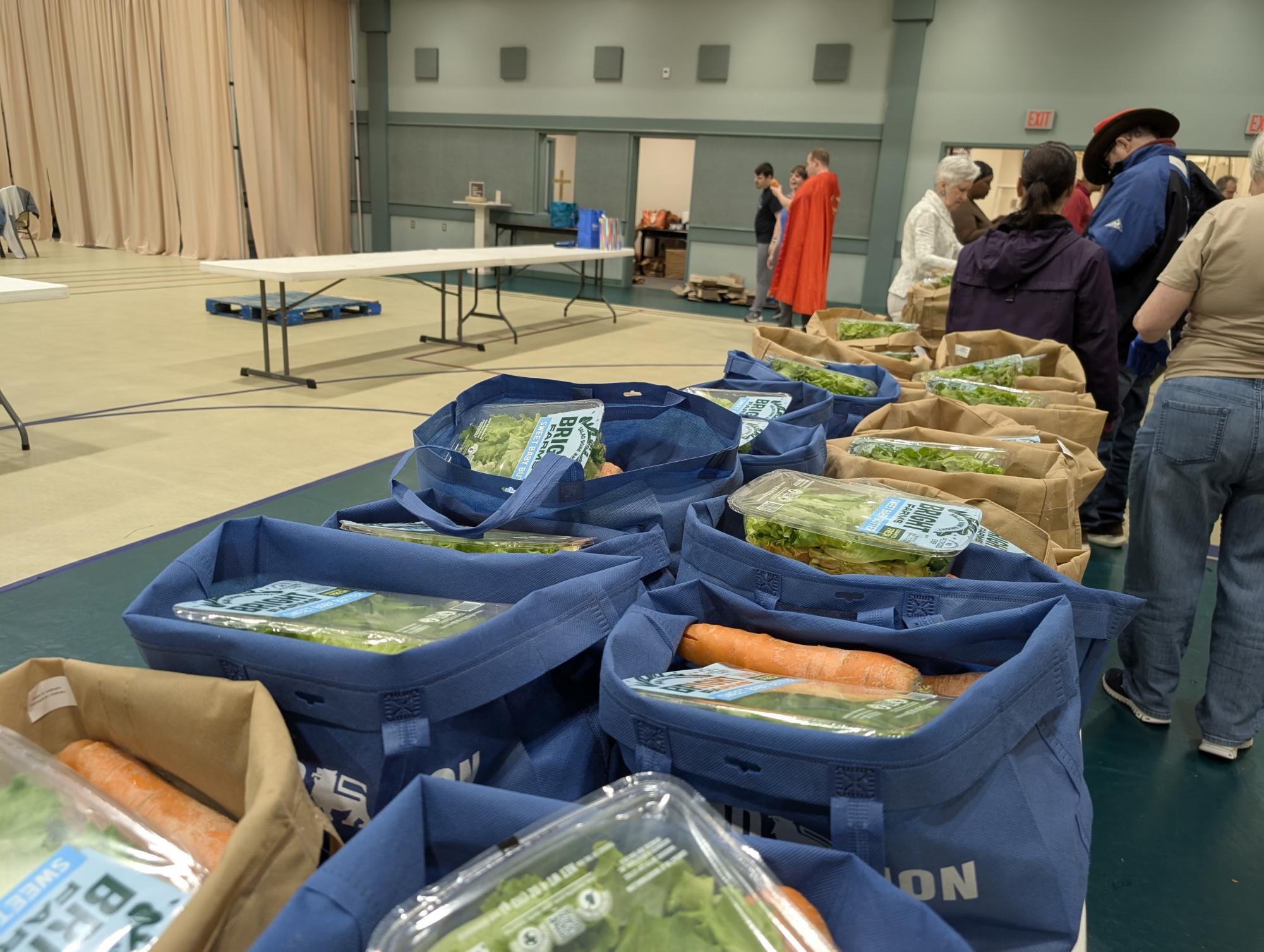
As about a dozen volunteers shuffled into Vineville United Methodist Church on a Thursday morning in March, they were welcomed by a familiar sight: two rows of plastic folding tables and more than 70 tote bags waiting to be set up in the church’s multipurpose recreational center.
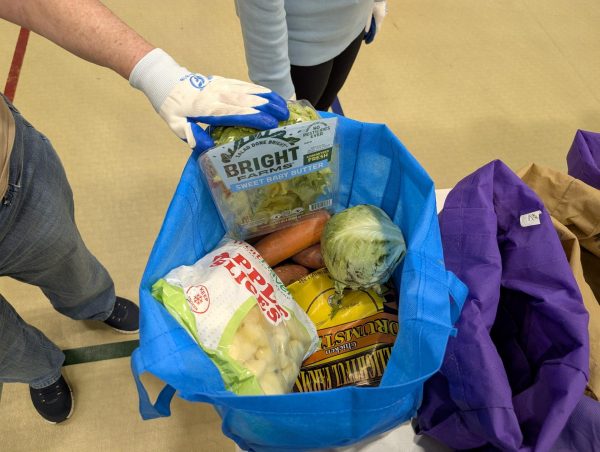
After 74 bags were unfolded and placed in rows on the tables, three pallets laden with cabbage, frozen chicken, sweet potatoes and other staples were wheeled onto the gym floor by the Middle Georgia Community Food Bank.
The stars of the drop-off, though, were five large sacks of carrots. The root vegetables, bright orange and packed in 50-pound bags, were about the size of forearms and attracted rapt attention.
“All right, I want y’all to look at these carrots, they’re huge. That is a carrot on steroids,” Cass DuCharme, who coordinates the church’s brown bag program, told the volunteers as they milled around the floor. “I thought it was an orange corn on the cob.”
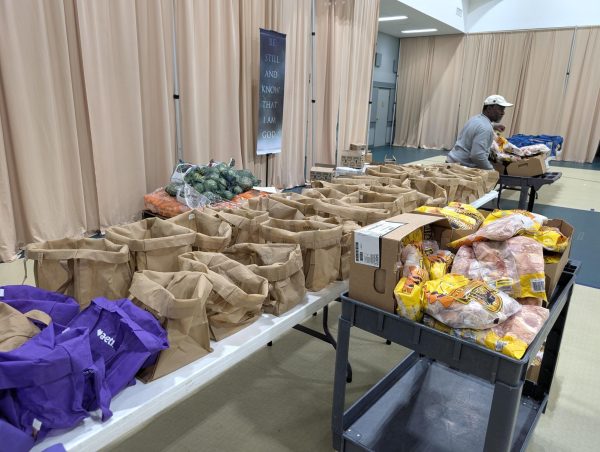
The tote bags, packed every two weeks with essential food supplies and bound for a senior living center less than a quarter of a mile from the church, were prepared by members of the church and volunteers from Wesley Glen Ministries. Once a month, about 10 adults from the ministry’s residential program for intellectually disabled people join the church as it packs food for older adults in the community.
The whole operation lasted less than two hours from the moment the first bag was unpacked to when the barren wooden pallets were retrieved by the food bank’s box truck around 11 a.m. But for the older adults who picked up a bag of fresh vegetables and chicken and a box of dry goods, the ingredients are essential to warding off food insecurity until the next shipment is delivered two weeks later.
Food insecurity occurs for a number of reasons, and many Macon-Bibb county residents face the issue due to a lack of grocery stores within walking distance of their home or a lack of transportation to stores which are beyond walking distance away, according to reporting by The Telegraph.
Limited access to adequately nutritious food is only one part of the issue. Economic pressures and preexisting health problems can also exacerbate food insecurity, according to Feeding America. The organization has found that housing, too, is correlated with food insecurity as older adults who rent are three times more likely to face food insecurity than older adults who own their homes, due in part to fixed incomes in retirement.
Across Middle Georgia, 1 in 4 children experience food insecurity, Kathy McCollum, president and CEO of the Middle Georgia Community Food Bank, said, which has led to high rates of free and reduced lunches in schools across the region. The meals, subsidized by the U.S. Department of Agriculture, provide students up to two meals a day during the school year: breakfast and lunch.
But for Middle Georgians who are outside of school, programs to alleviate food insecurity are not as readily available. Older adults, usually those at or past retirement age, and people with disabilities can face exacerbated food insecurity because of a lack of mobility. Overall, 1 in 6 adults experience food insecurity in the area, according to McCollum.
Nearly 26,000 people, or roughly 16.5%, are 65 or older in Bibb, according to a report from the Atlanta Regional Commission, which was prepared using Census data. Of the nearly 24,800 Bibb residents who are not part of the military and are 65 or older, the commission found 39% are disabled in some way.
Nearly 14 million Americans over the age of 60 “worry about having enough food,” according to Meals on Wheels. And while national organizations like Meals on Wheels help, small communities can remain out of reach of the large aid networks.
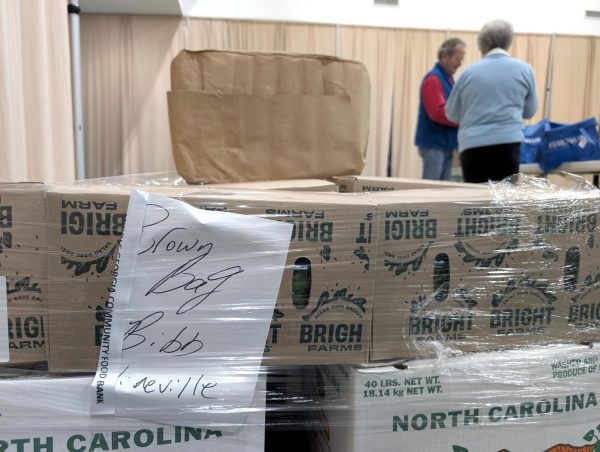
That is where local programs step into the fray. The Middle Georgia Community Food Bank, which supplies 24 counties as far north as Jasper and as far south as Telfair, acts as a node for food pantries and community groups which distribute food.
Like a tree’s root system, the Food Bank collects vital supplies before dispersing them to the system’s branches. McCollum said while the group has nearly two dozen employees in Macon, the organization partners with more than 200 local, non-profit or church-run agencies which help connect the food bank’s supplies with those who need them.
In 2025, the food bank sent food to about 15,180 households in its 24-county area, including 3,200 in Bibb county alone, according to Joe Stella, the Food Bank’s program coordinator.
Three agencies in Bibb county work with the food bank to supplement older adults’ pantries across the county of nearly 160,000 people. Stella said the purpose of the programs is not to replace grocery shopping but to provide three to four meals each period which tide over participants.
“You try to give them enough, a little bit of stuff to supplement in between the food that they get delivered to them in other ways, too,” Stella said.
The respite the programs provide could mean the difference between an older adult affording medication or foregoing a meal, Jennifer Tong, the project manager of the Seligman research team at the University of California – San Francisco, said.
“If you have a chronic disease, if you have poor health, then most likely you have to pay for medication and you’ll have high healthcare expenditures that would lead to decreased household income,” Tong said. “Choosing between medical care and food, that would lead to food insecurity and then that cycle would continue because your food insecurity would exacerbate your poor health.”
A common stressor for older adults is living in multigenerational households wherein they stretch their savings or benefits beyond for their own personal use, Tong said.
Two in 5 grandparents living with grandchildren under the age of 18 in Bibb county are responsible for feeding them, per the Atlanta Regional Commission’s report.
The issue is growing, according to a report from the USDA. Across the country, the USDA found 9.1% of households with an adult over 65 experienced food insecurity in 2022, up from 7.1% the year prior.
As programs are set up to enlarge access to food for older adults, Tong said there may need to be tailoring done so what resources are available are also accessible to the population.
The Seligman research team’s “Vouchers 4 Veggies” program grants vouchers for fresh food to low-income families in San Francisco. For the program, Tong said the team has had to consider parallel transportation vouchers, digital literacy and unique health conditions for older adults in the program.
‘Literally, we’re their neighbor’
As work packing bags wraps up around 10:30 a.m., DuCharme, who coordinates Vineville United Methodist’s brown bag program, drove his pickup truck to the Vineville Senior Living apartment complex. Three volunteers from the complex helped unload and cart the bags, boxes and surplus ingredients into a hallway by the building’s gym and offices.
While DuCharme slid bags and boxes to the liftgate of his truck, he chatted with one volunteer about a new apartment he had found in the complex.
The bond DuCharme and others in the program have formed with the volunteers from Wesley Glen Ministries is reflected in the gentle conversation they make and is, at times, reciprocated by the older adults who live in the nearby apartment complex.
“A lot of the reusable bags that we use get returned,” DuCharme said. “Occasionally, I’ll find a thank you note in the bottom of it from them, appreciating what we’re doing and those kinds of things.”
As both trucks’ trunks were emptied, members of the community came out to the parking lot to talk.
“The best part about it to me is that we’re not just helping our neighbors, but we’re also being a part of the community. Most of us that work here don’t live in Pleasant Hill, but we worship here and the Bible is a big part of Pleasant Hill. It’s been here for a long time,” DuCharme said. “The brown bag program, from the food bank’s perspective, is kind of their way to get other volunteers to help spread that.”