

It was cold and drizzly when 69-year-old Cassie Collins arrived at First Baptist Church of Christ in Macon and started down a series of slick steps, looking for the church food pantry.
“I live alone, and my SNAP benefits help me out a lot,” Collins said. “I’m a widow. I lost my husband like four or five years ago, and they really helped me.”
Now Collins is among the estimated 42 million people around the country (that includes about one and a half million in Georgia alone) who are preparing to go without their Supplemental Nutrition Assistance Program benefits for the month of November because of the ongoing federal government shutdown, which began Oct. 1.
The program, administered by the U.S. Department of Agriculture, will be paused after Oct. 31 if the shutdown doesn’t end.
Collins said the threat has her worried about more than her own wellbeing.
“I have a neighbor that has about four children, and she’s just—” she said, then paused.
“You know, it’s sad, especially with the people with the children that’s going to suffer through this thing.”
This was Collins’ first time at this food pantry.
As she carefully made her way to the church basement, she said making the rounds of pantries like this is how she’s planning to make it through November.
“That’s why I’m out here in the rain now,” she said. “I have no business out here like this. Trying to get me some groceries.”

The groceries in the church’s pantry came from the warehouse of the Middle Georgia Community Food Bank, where most days trucks and forklifts are busy moving food in and out through the loading dock to 161 food pantries in the region.
Not far from the loading dock are floor-to-ceiling shelves (here they are called “racks”) where the food bank’s CEO Kathy McCollum said most of the food supplied by the USDA would normally sit. But on this recent day, there was more empty space than food.
“You’re seeing more empty spaces now than certainly we’ve had,” McCollum said. “Back at the end of January, every rack in here was full. That hasn’t been the case.”
What changed is that in March, the Trump Administration cut about a billion dollars in funding to USDA programs that used to steer food to community food banks like this one. That’s why so many of these shelves are empty.
“For example, a few weeks ago, we realized that we didn’t have peanut butter,” McCollum said. “We typically get that from USDA, but that was one of those gaps.”
That meant that a food bank in Georgia, the state that according to the USDA leads the nation in peanut production, had no peanut butter.
McCollum said the Middle Georgia Community Food Bank has shifted to buying more food on the open market. That’s why she welcomes help in the form of money over food donations.
“Money goes farther than canned food,” she said. “We are good at taking money and turning it into food because we can buy what we need.”
This was on Oct. 7: Day 7 of the shutdown, before any federal paychecks had been missed and before anyone was yet talking about a pause in SNAP benefits.
The USDA has over $5 billion set aside in a contingency fund for SNAP recipients to be used during emergencies. At a recent press conference, Georgia’s U.S. Rep Sanford Bishop said this pause in SNAP benefits is just such an emergency.
Bishop’s 2nd District runs from Bibb County southwest to the Florida border and is one of the poorest in the country. Bishop said he and other Democrats asked the USDA to free up the contingency money.

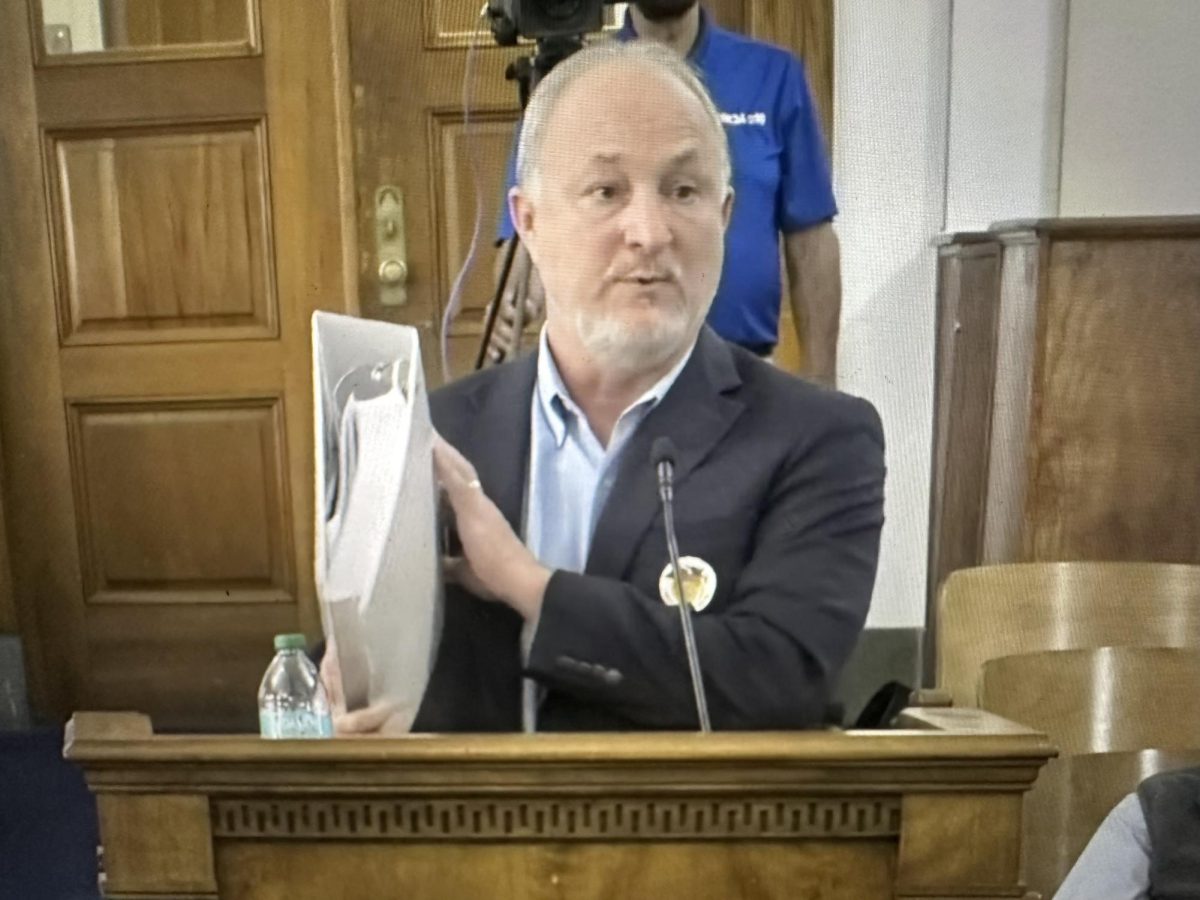
“We are urging the Secretary of Agriculture to utilize that $5 billion to extend those SNAP benefits so people won’t go hungry,” Bishop said to a small crowd outside Macon’s Head Start center, which provides early childhood education to children from low-income families, and is currently closed.
The USDA issued a memo saying releasing the SNAP contingency funds would only be legal in a weather emergency and, “If not for Congressional Democrats blocking government funding, November SNAP benefits would be paid on-time.”
Now, attorneys general from a number of Democrat-led states are suing the USDA, saying the suspension of SNAP benefits is unlawful.
At the First Baptist food pantry, Cassie Collins was greeted by a volunteer at the table just inside.
“Can you fill out one of these, please?” the volunteer said as she handed Collins a short form.
“Yes, ma’am,” Collins replied.
Collins got one of the last bags available. This pantry won’t have food to offer for another month, per its schedule. But there are 52 others in the county. She said she’ll visit some of them, too.
“That’s what I got to do,” she said.
“And pray.”